CPC National Collection Plant Profile
|
Sidalcea nelsoniana
Family: |
Malvaceae |
Common Name: |
Nelson's checker-mallow |
Author: |
Piper |
Growth Habit: |
Perennial |
CPC
Number: |
3980 |
|
|
|
|
Primary
custodian for this plant in the CPC National Collection of Endangered
Plants is: |
|
Edward Guerrant, Ph.D. contributed to this Plant Profile. |
Sidalcea nelsoniana
|
Sidalcea nelsoniana exemplifies the ongoing conflict between native ecosystems and the growing population of humans. As of 1997, there were a total of 58 populations/sites known with a total of around 26,500 individuals. While this may seem like an adequate number for a robust species, population numbers are declining and the species as a whole is at risk. Of the known populations, about 48% contain fewer than 100 individuals and 31% contain fewer than 25. Studies conducted have shown that S. nelsoniana is tolerant of a wide variety of conditions. However, all but two populations are currently heavily impacted by human presence as most are located along roadways, in and around plowed fields, and in the path of urban development.
One prime example of this conflict centers around a proposed dam and reservoir construction in the Willamette Valley of Oregon. The McMinnville Power and Light District has proposed to build a dam and reservoir on Walker Creek, a tributary of the Nestuca River. However, a large, vigorous population of Sidalcea nelsoniana would be flooded out of existence if the reservoir were filled. In addition, populations along the bank downstream would be effected by the changes in water flow. Proponents of the project have been pushing for approval since the mid 1980s. Conservationists have been fighting the project since its inception. Walker Creek is currently protected from damming under the Oregon Scenic Waterway System, but if this designation is removed, the reservoir will most likely be constructed and the population lost.
Distribution
& Occurrence |
|
State Range
Habitat
| |
Found growing in seasonally wet soils in a wide variety of habitats including the prairie/woodland border, grass meadows, drier sedge meadows, and disturbed areas. Associated species include yarrow (Achillea sp.), various grasses (Festuca, Agrostis, and Elymus) and sedges (Carex sp.). |
Distribution
| |
OR: Coast Range, Willamette Valley
WA: SW Washington
|
Number Left
| |
In 1985, 22 populations held a total to 4,781 plants. Many more were discovered when active searching began. By 1991, 48 populations were known with a total of 24,158 plants (Glad et al. 1994). By 1997, 58 populations were known, containing a total of 26,467 plants (CH2M 1997). There are 2 known populations in Washington (WNHP 1999).
The populations are divided in to 6 population centers. Four centers are in the Willamette Valley of Oregon, one is in the Coast Range of Oregon, and one is in the Cost Range of Southwestern Washington (USFWS 1993).
Approximately 48% of known sites contain 100 plants or fewer, while 31% contain 25 plants or fewer (USFWS 1993).
In 1985, 22 populations held a total to 4,781 plants. Many more were discovered when active searching began. By 1991, 48 populations were known with a total of 24,158 plants (Glad et al. 1994). By 1997, 58 populations were known, containing a total of 26,467 plants (CH2M 1997). There are 2 known populations in Washington (WNHP 1999).
The populations are divided in to 6 population centers. Four centers are in the Willamette Valley of Oregon, one is in the Coast Range of Oregon, and one is in the Cost Range of Southwestern Washington (USFWS 1993).
Approximately 48% of known sites contain 100 plants or fewer, while 31% contain 25 plants or fewer (USFWS 1993). |
State/Area
Protection
| |
State/Area |
Rank |
Status |
Date |
|
| |
|
|
|
|
|
Conservation,
Ecology & Research |
|
Ecological
Relationships
| |
Occasional fires have historically helped to maintain suitable open habitat and keep woody species from encroaching into the grasslands (WA Field Guide). Now, after many years of fire suppression, woody species encroachment is shading out the sun-loving Sidalcea nelsoniana.
Sidalcea nelsoniana can reproduce vegetatively by rhizomes (WA Field Guide). Their rhizomes are very thin and occur near the soil surface. They are easily broken off, creating individual plants. One individual clump may spread with a diameter of up to 0.5 meter (CH2M 1986).
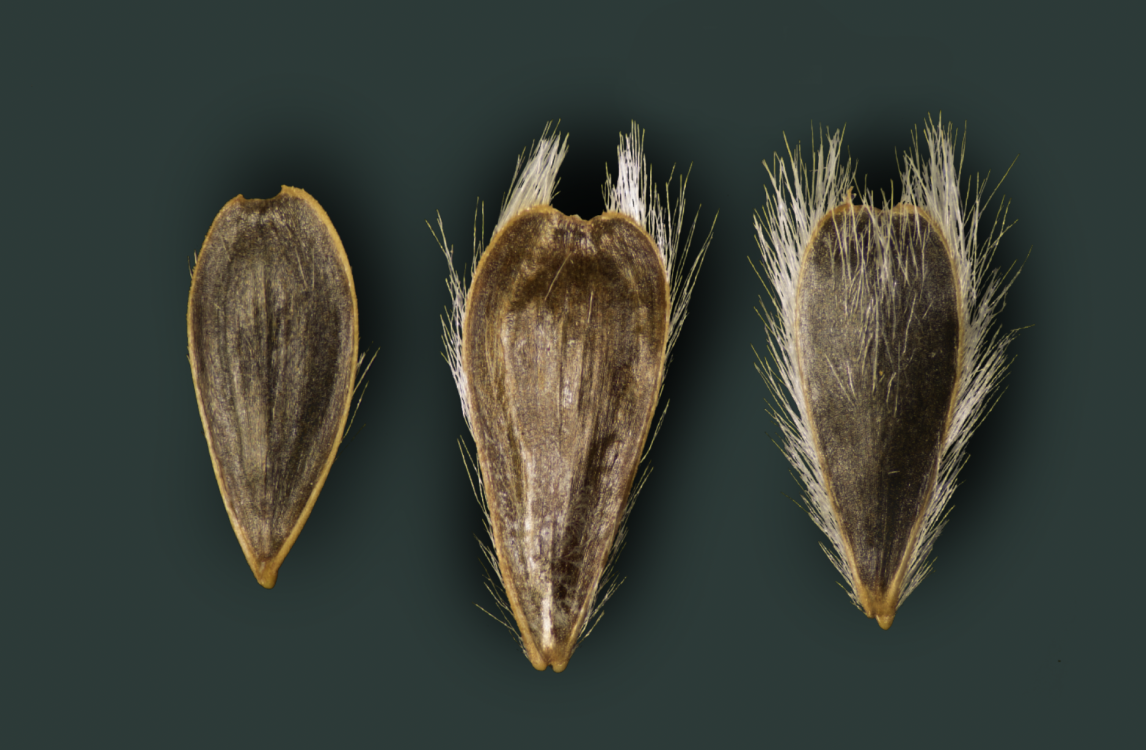
The seed coats are extremely hard and thus require scarification. In nature, the seed coat must become softened or must be broken open completely to allow water and oxygen to enter and to allow the embryo to develop (Halse and Mishaga 1988).
Sidalcea nelsoniana is a gynodioecious species. On each plant, flowers are either pistillate (with only functioning female parts, i.e. male-sterile) or hermaphroditic/perfect (with both male and female parts) (Halse et al. 1989). In small populations, the ratio of plants with perfect flowers to plants with pistillate flowers may adversely affect seed production (USFWS 1993).
Sidalcea nelsoniana is tolerant of a wide variety of conditions but is currently only found in two natural (i.e.. not roadsides, etc) habitats, the Finley National Wildlife Refuge and Walker Flat (USFWS 1993). |
Threats
| |
Potential construction of a dam and reservoir by McMinnville Water and Light (USFWS 1993).
Stochastic extinction (random events causing extinction) because of the small population (less than 100) size (USFWS 1993).
Herbicide spraying (Meinke 1982).
Urban development and plowing of roadsides (Meinke 1982).
Fire suppression leading to increase in competing woody species (WNHP 1999).
Hybridization with more common Sidalcea species (Kagan and Yamamoto 1986).
Logging (USFWS 1993).
Recreational activities (USFWS 1993).
Populations have been historically reduced due to agricultural land conversion and stream channel alterations (USFWS 1993).
Since 1985, four known sites have been extirpated due to plowing, deposition of fill material and yard debris, and intense roadside vegetation control (USFWS 1993).
Plants appear to be in poor condition as weevils, woody species encroachment, and herbicide spraying affect many (USFWS 1993). |
Current Research Summary
| |
Experimental reintroduction of plants from greenhouse-grown stock with the goal of establishing new, self-perpetuating populations. Approximately 89% of seedlings survived the first growing season. (CH2M 1986) By 1997, approximately 57% of the original transplants remained (CH2M 1997).
In an attempt to establish new populations capable of self-perpetuating, 200 rhizomes were collected in early September of 1986. They were transplanted to a similar habitat in the vicinity, By 1997, approximately 87% of the original transplant remained. (CH2M 1997).
Experiments were conducted to study the germination requirements and patterns. Fully mature seeds were found to germinate successfully without treatment but immature seeds only occasionally germinated if scarified. In order for water and oxygen to enter the seed and promote embryo expansion, a large piece of the seed coat from the dorsal surface of the seed had to be removed. Germination occurred 1-4 days after scarification (Halse and Mishaga 1988).
Determination of detailed habitat conditions including vegetation cover type, air temperature, soil pH, soil temperature, soil moisture, soil texture, and soil chemistry at the largest population. S. nelsoniana was found to be tolerant of a wide variety of habitats (Glad et al. 1987).
Taxonomic studies a) comparing S. nelsoniana, S. cusickii, S. campestris, and S. virgata and b) comparing various populations of S. nelsoniana were conducted. All four were found to be distinct species. S. nelsoniana was found to be morphologically consistent throughout its range, and the study supported the hypothesis that the Walker Flat population was not genetically distinct (Halse et al. 1989).
Monitoring of reintroduced plants at Walker Flat, Neverstill and South McGuire populations. (Guerrant 1997).
The effects of weevils on plants were studied. Researchers found that seed mortality rates from weevil parasitism ranged from 0% to 84% of total ovules. Consequently, seed abortion and weevil predation limited fitness and could potentially inhibit any seed set for an individual plant.
Frequency of seedling and juvenile plants was low, suggesting that many population structures are skewed towards older, more established plants (Gisler and Meinke 1997).
Preliminary results suggest that weevils prefer Sidalcea nelsonia over other, more common related species. There is no correlation between population size and parasitism, suggesting that small populations are just as vulnerable as large populations (Gisler and Meinke 1997).
Research on controlling seed predation by weevils with insecticides (Gisler, pers comm.).
Research on hybridization between Sidalcea nelsoniana and related species found in the same area (Gisler, pers comm.). |
Current Management Summary
| |
Walker Creek, around which many S. nelsoniana are found, is protected as part of the Oregon Scenic Waterways System
Plants found in areas that have been burned to benefit geese, are more robust than those plants in non-burned locations (USFWS 1993).
Monitoring of Walker Flat (a naturally occurring population), Neverstill and South McGuire (reintroduced populations) sites conducted in 1997 by The Berry Botanic Garden (Guerrant 1997).
Large-scale cultivation in a greenhouse setting has been initiated for reintroduction projects in Yamhill and Benton Counties (Gisler, pers comm.).
The height of the Trask River Dam near Hillsboro, OR was raised to increase the storage capacity of Barney Reservoir by 5 times. This inundated the land with water, destroying Sidalcea nelsoniana habitats and extirpated the population (USFWS 1993). As part of a mitigation, some plants were moved to higher ground. Additional plants were grown at the Berry Botanic Garden for transplantation. |
Research Management Needs
| |
Conduct searches for additional populations, especially in southern Washington.
Because this species spreads by rhizomes, it is important to count genets (genetic individuals) when conducting a study as opposed to counting the number of ramets (individual plants) (Kagan and Yamamoto 1986). Therefore, a study of the genetic structure of the populations would be important to ensure genetic variation within the species was being maintained.
Maintain or create large populations (>1000 individuals) so that even after weevil predation, adequate live seed will be dispersed (Gisler and Meinke 1997).
Further work to determine how much seed must be lost in order for the population to be unviable. Further research on the relationship between Sidalcea nelsoniana and the weevils that feed on the seed may be helpful (Gisler and Meinke 1997). |
Ex Situ Needs
| |
Study genetic diversity of populations (Kagan and Yamamoto 1986).
Collect and store seed from across the known range. |
|
Books (Single Authors)
|
|
Meinke, R.J. 1982. Threatened and Endangered Vascular Plants of Oregon: An Illustrated Guide. Portland, Oregon: U.S. Fish & Wildlife Service, Region 1. 326p.
|
|
ONHP. 2001. Rare, Threatened and Endangered Plants and Animals of Oregon.
|
|
Books (Sections)
|
|
Gisler, S.D.; Meinke, R.J. 1997. Reproductive attrition by predispersal seed predation in Sidalcea nelsoniana (Malvaceae): implications for the recovery of a threatened species. In: Kaye, T.N.; Liston, A.; Love, R. M.; Luoma, D.L.; Meinke, R.J.; Wilson, M.V., editors. Conservation and Management of Native Plants and Fungi. Native Plant Society. Corvallis, Oregon. p 56-61.
|
|
Conference Proceedings
|
|
Andreasen, K.; Baldwin, B.G. Phylogeny, unequal evolutionary rates, and biogeography in the western North American genus Sidalcea (Malvaceae). Botany 2000!; 6-10 August, 2000; Oregon Convention Center, Portland, OR. 2000.
|
|
Bartels, M.R.; Wilson, M.V. Fire and Mowing as Management Tools for Conserving a Threatened Perennial and its Habitat in the Willamette Valley, Oregon. Proceedings of the 17th North American Prairie Conference; 2001 (in press).
|
|
Electronic Sources
|
|
ONHDB. (2000). Oregon Natural Heritage Program Database. Portland, Oregon.
|
|
WNHP. (2000). Washington Natural Heritage Program Database. Olympia, Washington.
|
|
Journal Articles
|
|
1919. (Original Publication). Proc. Biol. Soc. Wash. 32: 41.
|
|
1997. The Jackson-Frazier Wetland. Bulletin of the Native Plant Society of Oregon. 30, 6: 65-66.
|
|
Bartels, M.R.; Wilson, M.V. In review. Flood tolerance of the threatened plant Sidalcea nelsoniana (Malvaceae): Ecological and management implications. Submitted to Wetlands.
|
|
Bornholdt, M. 1994. Sidalcea nelsoniana Finally Makes It. Bulletin of the Native Plant Society of Oregon. 27, 1
|
|
Glad, J.B.; Halse, R.R.; Mishaga, R. 1994. Observations on distribution, abundance, and habitats of Sidalcea nelsoniana Piper (Malvaceae) in Oregon. Phytologia. 76, 4: 307-323.
|
|
Glad, J.B.; Mishaga, R.; Halse, R.R. 1987. Habitat characteristics of Sidalcea nelsoniana Piper (Malvaceae) at Walker Flat, Yamhill County, Oregon. Northwest Science. 61: 257-263.
|
|
Halse, R.R.; Glad, J.B. 1986. A Note on the Status of Sidalcea nelsoniana (Malvaceae). Madroρo. 33, 3: 225-226.
|
|
Halse, R.R.; Mishaga, R. 1988. Seed Germination in Sidalcea nelsoniana (Malvaceae). Phytologia. 64, 3: 179-184.
|
|
Halse, R.R.; Rottink, B.A.; Mishaga, R. 1989. Studies in Sidalcea Taxonomy. Northwest Science. 63, 4: 154-161.
|
|
Mummert, A. 1997. Stalking the Wild Sidalcea. The Berry Botanic Garden Newsletter. 10, 3: 1-2.
|
|
Raven, A. 1999. Aese's Onion: A Rare Plant with an Urban Life. The Berry Botanic Garden Newsletter. 12, 2: 4-5.
|
|
USFWS. 1976. Proposed Endangered Status for 1700 U.S. Plants. Federal Register. 41: 24523-24572.
|
|
USFWS. 1988. Regional News--Region 1. Endangered Species Technical Bulletin. 13, 1: 2.
|
|
USFWS. 1993. Determination of Threatened Status for the Plant Sidalcea nelsoniana (Nelson's Checker-mallow). Federal Register. 58, 28: 8235 - 8242.
|
|
Newspaper Articles
|
|
Eastman, D. 1984 Wednesday, December 12, 1984. A Rare Blossom: Photographer considers survival of rare plant vs. future of McMinnville water supply. News-Register; McMinnville, Oregon.
|
|
Personal Communications
|
|
Gisler, S. 2001. Personal Communication. Steve Gisler, Oregon Department of Agriculture, Plant Conservation Department, Corvallis, Oregon.
|
|
Kagan, J.S.; Yamamoto, S. 1986. Letter to Dr. Robert Parenti, U.S. Fish and Wildlife Service, Boise Field Office. Dated December 22, 1986.
|
|
Reports
|
|
CH2M.Hill. 1986. Studies of Sidalcea nelsoniana, 1986. Submitted to U.S. Bureau of Land Management, Salem District and U.S. Fish and Wildlife Service. Submitted by City of McMinnville Water and Light Department.
|
|
CH2M.Hill. 1997. Technical Memorandum: Sidalcea nelsoniana Monitoring-1997. Prepared for McMinnville Water and Light.
|
|
Gisler, S.; Meinke, R.J. 1995. Sidalcea nelsoniana: Oregon Department of Agriculture Research Results (1994); Examination of Previous MWL-Sponsored Research. Unpublished Draft of Preliminary Report. Oregon Department of Agriculture, Plant Conservation Biology Program. p.17+.
|
|
Guerrant, E.O. 1997. Monitoring Nelson's checker-mallow (Sidalcea nelsoniana) at Walker Flat, Neverstill, and South McGuire: 1997. Salem District, Oregon: Unpublished Report to USDI, Bureau of Land Management. p.27+.
|
|
USFWS. 1998. Recovery Plan for the Threatened Nelson's Checker-mallow (Sidalcea nelsoniana). Portland, Oregon: U.S. Fish and Wildlife Service. p.61.
|
|
Wilson, M.V.; Hammond, Paul C.; Christy, John A.; Clark, Deborah L.; Merrifield, Kathy; Wagner, David H. 1998. Upland Prairie. Contributed Chapter: Part I the U.S. Fish and Wildlife Service Willamette Basin Recovery Plan. U. S. Fish and Wildlife Service, Oregon State Office. Order no. 13420-6-0287 (2).
|
|
Wilson, M.V.; Hammond, Paul C.; Christy, John A.; Clark, Deborah L.; Merrifield, Kathy; Wagner, David H. 1998. Wetland Prairie. Contributed Chapter: Part I the U.S. Fish and Wildlife Service Willamette Basin Recovery Plan. U. S. Fish and Wildlife Service, Oregon State Office. Order no. 13420-6-0287 (2).
|
|
WNHP. 1999. Field Guide to Selected Rare Vascular Plants of Washington. Produced as part of a cooperative project between the Washington Department of Natural Resources, Washington Natural Heritage Program, and the U.S.D.I. Bureau of Land Management, Spokane District.
|
|
Theses
|
|
Bartels, M.R. 2000. Conservation of Sidalcea nelsoniana through habitat management: effects of burning, mowing, and altered flooding regime on a rare Willamette Valley perennial. [M.S. Thesis]: Oregon State University.
|
|
|
|
This
profile was updated on 7/8/2010 |
|