Go to CPC Home Page

Conserving and restoring
America's native plants

CPC National Collection Plant Profile Home
 
 
Ranunculus reconditus


Family: 
Ranunculaceae  (Buttercup Family)
Common Name: 
obscure buttercup
Author: 
A. Nels. & J.F. Macbr.
Growth Habit: 
Perennial
CPC Number: 
3710

 Distribution
 Protection
 Conservation
 References
Profile Links
 ITIS
 Tropicos
 PLANTS
 Fish & Wildlife

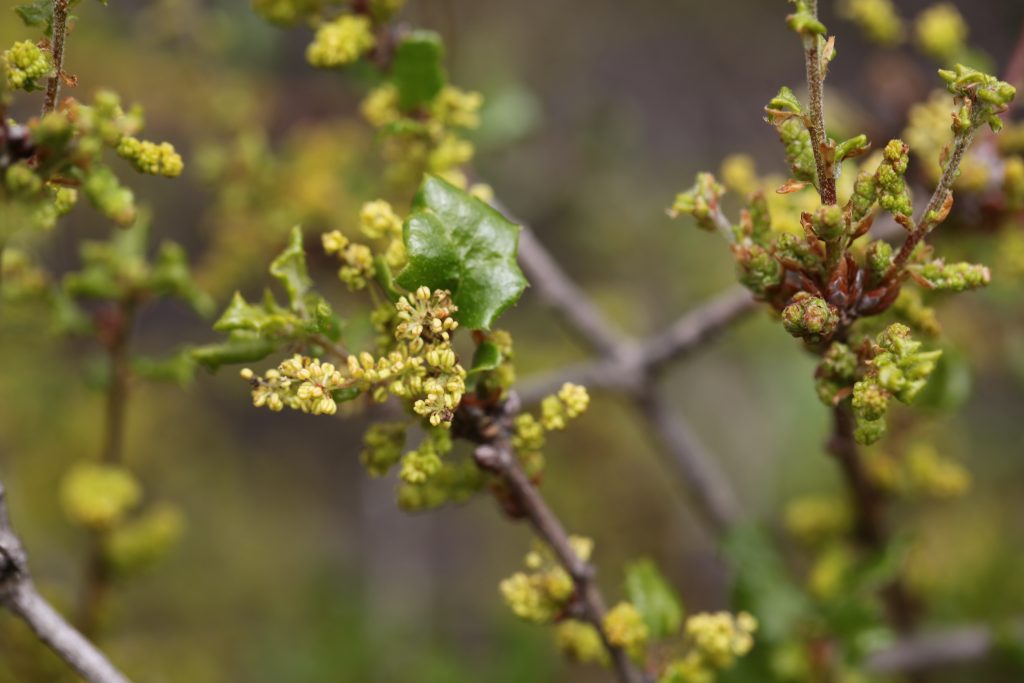
Ranunculus reconditus enlarge
Photographer: Molly Grothaus

Ranunculus reconditus enlarge
Photographer: Ried Schuller


Ranunculus reconditus is Fully Sponsored
Primary custodian for this plant in the CPC National Collection of Endangered Plants is: 
Edward Guerrant, Ph.D. contributed to this Plant Profile. 

 
Ranunculus reconditus


First of all, there are very few populations of Ranunculus reconditus. Secondly, although the species is listed as Endangered by the State of Oregon and Threatened by the State of Washington, only one piece of land is officially protected due to where the populations are located. Populations on the Columbia Hills Natural Area Preserve in Washington are the only sites officially (legally) protected from grazing and development. Other populations, while not protected by law, have been voluntarily protected. In Oregon, one large population was once on private land that was managed by The Nature Conservancy. The Nature Conservancy purchased the land, and then sold it to the Bureau of Land Management (BLM), who now manages it. This population is monitored annually and appears stable. The land is on a grazing allotment, but because of the steep, rocky terrain where the buttercup lives, grazing does not impact the plants at this site (Ron Halvorson, pers. comm.).

The Obscure buttercup resembles the common, widespread sagebrush buttercup, Ranunculus glaberrimus. The common species has entire or broadly lobed leaves, while the rare Ranunculus reconditus has dissected leaves (divided into three sections). It is unknown why these plants, that look so much alike and are closely related, have such different distributions. R. glaberrimus is found in ponderosa pine woodlands and sagebrush desert from British Columbia to northern California, New Mexico, and as far east as the Dakotas and Nebraska. In contrast, Ranunculus reconditus is found at only 10 occurrences along the Columbia River in Washington and Oregon.


Distribution & Occurrence

State Range
  Oregon
Washington
State Range of  Ranunculus reconditus

Habitat
  Habitat in Washington consists of open, well-drained slopes and basalt ridges dominated by scattered big sagebrush (Artemisia tridentata), bluebunch wheatgrass (Pseudoroegneria spicata) and buckwheat (Eriogonum spp.). In Oregon, habitat is generally in openings within Oregon white oak (Quercus garreyana) woodland. Scattered ponderosa pine (Pinus ponderosa) and/or Douglas fir (Pseudotsuga menziesii) may also be present. Elevations range from 2900-3900 ft (900-1200 m). Soils may be both loamy and moderately deep, or in the transition area between loamy and rocky, shallow soils.

Distribution
  OR, WA
OR: Wasco County
WA: Klickitat County

Number Left
  In WA, 8 occurrences known since 1987. Populations range from "100+" to "several hundred." One other occurrence was reported in 1938, but the location data is not complete. Either it cannot be re-located, or it has been extirpated (WNHP 2000). 2 occurrences are currently known in Oregon with population numbers ranging from 50 to 800 (ONHP 2000).

Protection

Global Rank:  
G5T2
 
11/26/1997
Guide to Global Ranks
Federal Status:  
SOC
 
Guide to Federal Status
Recovery Plan:  
No


State/Area Protection
  State/Area Rank Status Date  
  Oregon S1 LE 7/12/1995  
  Washington S1 T 10/1/2001  

Conservation, Ecology & Research

Ecological Relationships
  Plants emerge in February and early March (Wilderman, 2001). Flowers emerge very early in the year (early to mid-March), compared to other species in the area. This may give this buttercup a competitive advantage over other vegetation that flowers later when temperatures rise (WNHP 1999). Seeds are produced in April and leaves senesce (dry and fall off) by mid-May (Wilderman 2001).

The primary pollinator is suspected to be Amecocerus sp. (a beetle). It has only been found crawling within plants, not flying, suggesting that pollination occurs within limited distance with other plants. As the fruit matures, the flowering stalk bends downward until the seed head touches the soil. Most seeds are dispersed under or near the parent plant, creating a "clumped" distribution. Seed death, low germination, and seedling death are possible factors in explaining why such a small percentage of the seeds produced annually become established as seedlings (Wilderman 2001). Reproductive output and seedling establishment are dependant on yearly precipitation levels (Wilderman 2001).

In Washington, the habitat has a fire interval of 30-90 years. It is not known if the species relies on fire in any way (WNHP 1999). However, in Oregon, the rocky, steep, and isolated habitat does not naturally burn (Ron Halvorson, pers. comm.).

Threats
  The Washington Natural Heritage Program (WNHP 1999) states threats as:
• Livestock grazing
• Agricultural conversion
• Invasion of noxious weeds
• Hot fires due to increased leave litter after years of fire suppression
• Potential ORV use

Current Research Summary
  • Studies at the Columbia Hills Natural Area Preserve managed by the Washington State Department of Natural Resources. Demographic monitoring of plants at three separate locations within the Natural Area Preserve was conducted between 1996 and 1998. High survival rates were documented for vegetative and reproductive plants (90-98%) but low rates for seedlings (18-29%). Seed production at one site averaged 3138 seeds/year while seedling recruitment was only 23 seedlings/year. Overall, populations appeared stable (Wilderman 2001).
• Initial germination tests at The Berry Botanic Garden showed extremely low germination percentages. Only seeds subjected to 8 weeks of cold stratification germinated. When subsequently placed in 68°F (20°C) conditions, 17% germinated. Under alternating 50°F/68°F (10°C/20°C) temperatures, 43% of seeds germinated. Further research should be done to determine if germination success can be increased (BBG File)
• Analysis of genetic diversity within and between populations using RAPD markers. Genetic comparison of the rare Ranunculus reconditus with the closely related and widespread R. glaberrimus (Sallie Herman, pers. comm.).

Current Management Summary
  • The largest population is located on land designated as a Natural Area Preserve. It is protected against grazing and damage from agriculture. Demographic monitoring has been conducted.
• Annual monitoring of the Oregon population conducted by the BLM (Ron Halvorson, pers. comm.).

Research Management Needs
  • Locate extant populations (Meinke 1982)
• Study effect of fire on populations (WNHP 1999)
• Study impact of noxious weeds on R. reconditus (Ron Halvorson, pers. comm.).
• Study pollination biology, seed germination and ecology, and seedling establishment (Wilderman 2001).
• Continue demographic monitoring to help elucidate long term population trends (Wilderman 2001)

Ex Situ Needs
  • Collect and store seeds from all known populations
• Determine optimum germination conditions. Develop tissue culture methods if germination percentages remain low.
• Determine effective propagation and reintroduction protocols

References
 
Books (Single Authors)
 
Meinke, R.J. 1982. Threatened and Endangered Vascular Plants of Oregon: An Illustrated Guide. Portland, Oregon: U.S. Fish & Wildlife Service, Region 1. 326p.
 
ONHP. 2001. Rare, Threatened and Endangered Plants and Animals of Oregon. Portland, Oregon: Oregon Natural Heritage Program. 94p.
 
Books (Sections)
 
Wilderman, D. 2001. Population Characteristics and Demographics of Obscure Buttercup (Ranunculus reconditus Nels. &Macbr.). In: Reichard, S.H.; Dunwiddie, P.W.; Gamon, J.; Kruckeberg, A.R.; Salstrom, D.L., editors. Conservation of Washington's Rare Plants and Ecosystems. Washington Native Plant Society. Seattle, Washington.
 
Electronic Sources
 
ONHDB. (2000). Oregon Natural Heritage Program Database. Portland, Oregon.
 
WNHP. (2000). Washington Natural Heritage Program Database. Olympia, Washington.
 
Journal Articles
 
1913. (Original Publication). Bot. Gaz. 56: 473.
 
USFWS. 1996. Notice of Reclassification of 96 Candidate Taxa. Federal Register. 61, 40: 7457-7463.
 
Personal Communications
 
Halvorson, R. 2001. Botanist, Bureau of Land Management, Prineville District, Prineville, Oregon. Personal Communication. October 2001.
 
Herman, S. 2001. Personal Communication. November 2001.
 
Reports
 
WNHP. 1999. Field Guide to Selected Rare Vascular Plants of Washington. Produced as part of a cooperative project between the Washington Department of Natural Resources, Washington Natural Heritage Program, and the U.S.D.I. Bureau of Land Management, Spokane District.
 

This profile was updated on 11/30/2009
Search for other Plant Profiles


California Oregon Washington Idaho Nevada Arizona utah Montana Wyoming Colorado New Mexico North Dakota South Dakota Nebraska Kansas Oklahoma Texas Minnesota Iowa Missouri Arkansas Louisiana Wisconsin Illinois Michigan Michigan Indiana Ohio Kentucky Tennessee Mississippi Alabama Florida Georgia South Carolina North Carolina Virginia West Virginia Pennsylvania Delaware Maryland New Jersey Connecticut Rhode Island Masachusetts Vermont New Hampshire Maine New York New York Hawaii Hawaii Hawaii Hawaii Profile Image Profile Image