CPC National Collection Plant Profile

Phacelia argentea

Photographer:
Ed Guerrant

Heading for profile page
CPC Home Join now
About CPC
CPC National Collection
Conservation Directory Resources
Invasive Plant Species Plant News
Plant Links Participating Institutions
Contribute
Search CPC
Search    Alphabetical List    Reference Finder    CPC Home


CPC National Collection Plant Profile

Phacelia argentea


Family: 
Hydrophyllaceae  
Common Names: 
sand-dune phacelia, silvery phacelia
Author: 
A. Nels. & J.F. Macbr.
CPC Number: 
3339

Distribution
Protection
Conservation
References
Profile Links
 ITIS
 Tropicos
 PLANTS
 Fish & WildLife

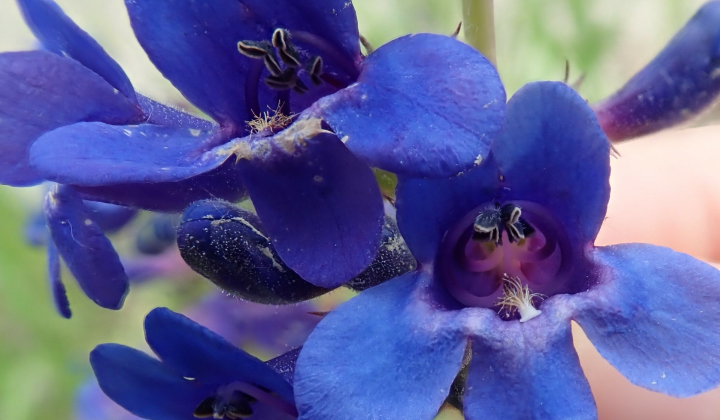
Phacelia argenteaenlarge
Photographer: Ed Guerrant

Phacelia argenteaenlarge
Photographer: Tom Kaye


Phacelia argentea is Not Sponsored
Primary custodian for this plant in the CPC National Collection of Endangered Plants is: 

 
Phacelia argentea


Silvery phacelia is the only known Phacelia to grow on coastal sand dunes (Rittenhouse 1995). It grows on the immediate coastal dunes from northern Del Norte County in California to southern Coos County in Oregon. Although this seems like a large distribution (it spans 130 miles), not all of this stretch of coast is suitable habitat because much of the coastline is sharp cliffs or rocks, not sand dunes (Rittenhouse 1995). The encroachment of non-native European beachgrass is reducing this habitat even further.

The coast of California and Oregon had a dramatically different appearance 150 years ago. Many beaches had no fore-dune, and in areas where dunes formed, they ran perpendicular to the shore (Russo et al. 1988). European beachgrass was introduced in the late 1800's to stabilize the beach sand. It does its job very well, a little too well in fact. European beachgrass outcompetes native vegetation and alters the native dune community by creating steep foredunes as it traps blowing sand. These steep foredunes run parallel to the shore, a stark contrast to the natural state of the dunes (Russo et al. 1988). In areas where European beachgrass is dominant, silvery Phacelia populations are both small and fragmented or totally nonexistent (Rittenhouse 1995).

Although there are many known populations of Silvery Phacelia compared to other rare species, the majority of populations are small and separated by great distances. Reports indicate that most appear to be declining in numbers (Rittenhouse 1995).

Distribution & Occurrence

State Range
  California
Oregon
State Range of  Phacelia argentea
Habitat
  Phacelia argentea grows on unstabilized or semi-stabilized sand dunes, bluffs, and bases of coastal headlands along the northern California and southern Oregon Pacific coast. Plants are found above the high tide level but below 65 ft (20 m) in elevation.

Distribution
  CA, OR
CA: Coastal dunes (Del Norte Co.)
OR: Coastal dunes (Coos and Curry Co.)

Number Left
  As of 1995: 28 sites in Oregon with population sizes ranging from 3 individuals to over 2000. Most were under 100, and many on private land had not been inventoried. In California, 5 sites were known, with population sizes of 15; >500; 1000; 2000; and 10,000 individuals (Rittenhouse 1995).

As of 2001, 4 known sites in CA were presumed extant according to California Natural Diversity Database. No indication of numbers of individuals (2001).

Protection

Global Rank:  
G2
 
7/9/2007
Guide to Global Ranks
Federal Status:  
SC
 
Guide to Federal Status
Recovery Plan:  
No
 

State/Area Protection
  State/Area Rank Status Date  


Conservation, Ecology & Research

Ecological Relationships
  The roots of silvery Phacelia and other native beach species serve to stabilize the sand substrate. They do not, however, completely stabilize the dunes. In an effort to control the shoreline and prevent sand from encroaching on streets and property, European beachgrass (Ammophila arenaria) was introduced. It is highly effective at stabilizing dunes and trapping sand. When European beachgrass invades, it stabilizes the dunes, making them uninhabitable to the silvery Phacelia (Rittenhouse 1995). The dunes also change shape and orientation when covered by European beachgrass.

Little is known about the biology of Phacelia argentea. Life span, time to first flowering and seed production should all be investigated (Rittenhouse 1995). Silvery Phacelia reproduces primarily be seeds, short rhizomes, and spreads by a branched caudex (Rittenhouse 1995). The silvery appearance comes from the tightly appressed hairs on the leaves (Rittenhouse 1995). The hairs may help to keep salt off the surface of the leaves, decrease water loss in the harsh environment, or reflect excess light.

Pollination is insect mediated. The primary pollinators appear to be leafcutter bees (Anthidium palliventre), bumblebees (Bombus sp.), and honeybees (Apis melifera). This particular species of leafcutter bee is found only on the coastal dunes ranging from southern California to British Columbia. They seem to utilize the members of the genus Phacelia that occur directly on the coast and slightly inland. The females are the primary pollinators. They spread pollen from flower to flower as they collect it to line their burrows and feed the developing larvae (Rittenhouse 1993). This is a prime example of how our native flora and fauna are interconnected. Destroying one species destroys another. Preserving one species preserves another.

Threats
  • Coastal recreation and development (Meinke 1982).
• Stabilization of dunes by invading European beachgrass (Ammophila arenaria) leading to loss of suitable habitat (Rittenhouse 1995).
• Off-road vehicle use. Most populations are in areas where off-road vehicles (ORV's) are prohibited or seldom used. However, some evidence of damage to plants by off-road vehicles (ORVs) has been documented (Rittenhouse 1995).

Current Research Summary
  • Studies were done to determine if insects are required for successful seed set and observation of pollinators. Inflorescences were either bagged before flower opening or not bagged as a control. Bagged inflorescences had 3% seed set while un-bagged inflorescences had 40% seed set. Seed production appears low even in flowers available to pollinators (Rittenhouse, 1993).
• Germination trials at The Berry Botanic Garden indicate that seeds germinate readily (between 80% and 100%) when subjected to alternating 50°/68° F (10°/20° C) temperatures, whether cold stratified or not. When subjected to constant 68°F (20°C) temperatures no seeds germinated. (BBG file).

Current Management Summary
  • A Conservation Strategy was finalized in 1995 for plants found on Bureau of Land Management (BLM) property. It called for surveying of potential habitat, inventorying of known populations, and monitoring to determine population trends.
• Initial monitoring was conducted in 1995 and 1996 at three sites on BLM land. As of 2001, the sites had not been re-monitored (Brian 2001)
• Two sites are on land designated as the New River Area of Critical Environmental Concern (ACEC).
• Seed collected and stored at The Berry Botanic Garden. Wild collected seed from 1984 (one location in Oregon) and 1990 (4 sites in California). Most collections are bulked (seeds from more than one individual). Seeds from garden grown plants has been collected and stored.

Research Management Needs
  • Research life history: life span, time to first flowering, seed production, etc (Rittenhouse 1995).
• Restrict ORV use of dune habitat
• Remove European beachgrass from dunes.
• Use native sand-binders to hold sand in place along roads instead of European beachgrass.

Ex Situ Needs
  • Seed collections from known wild populations keeping maternal lines separate (1 plant/bag).
• Determine propagation protocols and reintroduction methods.

References

Books (Single Authors)

Abrams, L.; Ferris, R.S. 1944. Illustrated Flora of the Pacific States: Washington, Oregon, and California. Stanford, CA: Stanford University Press.

Meinke, R.J. 1982. Threatened and Endangered Vascular Plants of Oregon: An Illustrated Guide. Portland, Oregon: U.S. Fish & Wildlife Service, Region 1. 326p.

Munz, P.A.; Keck, D.D. 1959. A California flora. Berkeley, CA: Univ. California Press. 1681p.

Nakamura, Gary; Kierstead Nelson, J. 2001. Illustrated Field Guide to Selected Rare Plants of Northern California. University of California, Agriculture and Natural Resources. Publication 3395. 370p.

ONHP. 2001. Rare, Threatened and Endangered Plants and Animals of Oregon.

Books (Edited Volumes)

James C. Hickman, Editor. 1993 The Jepson manual: Higher plants of California. Berkeley: University of California Press. 1400p.

Electronic Sources

CDFG. (2001). Special Vascular Plants, Bryophytes, and Lichens List. Biannual Publication, Mimeo. 141 pp. California Department of Fish and Game, Natural Diversity Database. Accessed: 2001.

CNDDB. (2000). Calfornia Natural Diversity Data Base (CNDDB). Version 2.1.2. California Natural Diversity Database. Accessed: California Department of Fish and Game, Sacramento.

ONHDB. (2000). Oregon Natural Heritage Program Database. Portland, Oregon.

Journal Articles

1916. (Original Publication). Bot. Gaz. 61: 24.

Rittenhouse, B. 1993. Observation on the Pollination of silvery phacelia. Bulletin of the Native Plant Society of Oregon. 26, 10

Schwartz, A. Banking on Seeds to Avert Extinction.

Personal Communications

Brian, N. Dated October 2, 2001, 2001. E-mail communication from Nancy Brian (Coos Bay BLM Botanist) to Rebecca Weaver. On file at BBG.

Reports

Guerrant, E.O. Jr. 1992. Summary of the Activities by The Berry Botanic Garden between 10/1/90 and 9/31/91 on Sensitive Plant Species of Concern to the Bureau of Land Management. Portland, OR: The Berry Botanic Garden. p.6.

Harper, K.T.; Armstrong, L. 1992. 1991 Challenge Cost Share Project Uinta National Forest. Target Species: Phacelia argillacea Atwood (clay phacelia). Cost share agreement between the Uinta National Forest & Brigham Young University. p.15 + maps & appendices. Unpublished report.

Rittenhouse, B. 1995. Conservation Stragtegy for Silvery Phacelia (Phacelia argentea A. Nels. & J.F. Macbr.). Bureau of Land Management, Coos Bay District. p.13.

Russo, M.; Pickart, A.J; Morse, L.E.; Young, R. 1988. Element Stewardship Abstract for Ammophila arenaria. The Nature Conservancy.


  This profile was updated on 7/8/2010
California
Oregon
Washington
Idaho
Nevada
Arizona
Utah
Montana
Wyoming
Colorado
New Mexico
North Dakota
South Dakota
Nebraska
Kansas
Oklahoma
Texas
Minnesota
Iowa
Missouri
Arkansas
Louisiana
Wisconsin
Illinois
Michigan
Michigan
Indiana
Ohio
Kentucky
Tennessee
Mississippi
Alabama
Florida
Georgia
South Carolina
North Carolina
Virginia
West Virginia
Pennsylvania
Delaware
Maryland
New Jersey
Connecticut
Rhode Island
Massachusetts
Vermont
New Hampshire
Maine
New York
New York
Hawaii
Hawaii
Hawaii
Hawaii