CPC National Collection Plant Profile

Mirabilis macfarlanei

Photographer:
Tom Kaye

Heading for profile page
CPC Home Join now
About CPC
CPC National Collection
Conservation Directory Resources
Invasive Plant Species Plant News
Plant Links Participating Institutions
Contribute
Search CPC
Search    Alphabetical List    Reference Finder    CPC Home


CPC National Collection Plant Profile

Mirabilis macfarlanei


Family: 
Nyctaginaceae  
Common Name: 
MacFarlane's four-o'clock
Author: 
Constance & Rollins
Growth Habit: 
Perennial
CPC Number: 
2868

Distribution
Protection
Conservation
References
Profile Links
 ITIS
 Tropicos
 PLANTS
 Fish & WildLife
 Forest Service

Mirabilis macfarlaneienlarge
Photographer: Tom Kaye

Mirabilis macfarlaneienlarge
Photographer: Tom Kaye


Mirabilis macfarlanei is Fully Sponsored
Primary custodian for this plant in the CPC National Collection of Endangered Plants is: 
Edward Guerrant, Ph.D. contributed to this Plant Profile.

 
Mirabilis macfarlanei


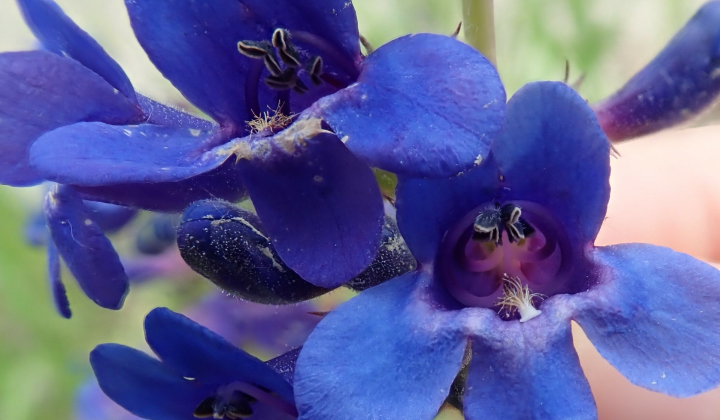
This showy plant is quite something if you encounter it in the dry areas of Eastern Oregon and Western Idaho. Often growing on dry, steep slopes high above the river, this four-o'clock, with bright magenta flowers and purplish stems, stands out on the brownish hillsides.

Mirabilis macfarlanei was listed as Endangered by the US Fish and Wildlife Service in 1979. It was threatened by many things, including: trampling, grazing, disease, insect damage and horticultural collecting. An initial recovery plan was created in 1985. It called for baseline studies, determination of population trends, and periodic sampling of populations. The species was downlisted to Threatened in 1996 due to the discovery of additional populations and successful recovery efforts. A revised recovery plan was finalized in 2000.

The protection of Mirabilis macfarlanei is especially important because it is host to a rare moth that was discovered in 1983. This Heliodinid moth (Lithariapteryx sp.) is host specific to M. macfarlanei. The moth larvae only feeds on the leaves and flowers of Mirabilis macfarlanei (Baker 1985). In the interests of biodiversity, it is important to preserve both the rare moth and the rare four-o'clock. Because the moth's feeding preferences have the capability of reducing reproduction of the four-o'clock, it is important to protect large numbers of plants. With larger numbers of plants, there will be a greater chance for plants to reproduce.

Above ground, the plant does not look very large. It may consist of a few trailing branches up to a couple of feet across. However, underground, the plant has a thick taproot that may grow up to 8 feet deep! This large underground structure enables it to remain dormant in poor growth years or to recover from above ground disturbances. For example, in 1997, an accidental herbicide spraying by the county weed management board in Idaho severely impacted several thousand stems of Mirabilis macfarlanei on both federal and private land. At least 2,750 of the stems on federal land showed heavy damage from the spraying, but in 1998, monitoring showed that many of the plants had survived (USFWS 2000). The long-term effects are unknown. Seeds collected that year from the affected populations smelled strongly of herbicide, indicating that the herbicide may have impacted seeds produced that year (Andrea Raven, pers. comm. 2001).

The species was named after Ed MacFarlane, who was a riverboat pilot on the Snake River for over 30 years. Ed MacFarlane did not discover the species. It was shown to him by Harold St. John, a botanist, on a trip up the Snake River. For unknown reasons, St. John did not publish his find. Later, Ed MacFarlane showed two other botanists, Lincoln Constance and Reed Rollins, the plant. They described the species and named it after the pilot (Pilz 1978 in Kaye and Meinke 1992).

Distribution & Occurrence

State Range
  Idaho
Oregon
State Range of  Mirabilis macfarlanei
Habitat
  Found growing primarily on west or southeast facing slopes in the canyon areas of the Imnaha, Snake, and Salmon Rivers. Slopes range from extremely steep to nearly flat, but are always covered with sandy to talus (gravel and cobble) substrate. Elevations range from 1000 to 3000 ft (300-900 m).

Distribution
  OR, ID
OR: Blue Mountains (Imnaha River and Snake River)
ID: lower Salmon River Canyon and Snake River

Number Left
  Currently 11 populations in Idaho and Oregon with a total population and estimated 8,000 to 9,000 individuals (based on 39,00 to 44,000 stems) (Craig Johnson in litt. 1999 in U.S. Fish and Wildlife Service, 2000).

Because of clonality, it is difficult to determine the number of genetic individuals (Barnes et al. 1997).

Protection

Global Rank:  
G2
 
7/10/1995
Guide to Global Ranks
Federal Status:  
LT
 
4/15/1996
Guide to Federal Status
Recovery Plan:  
Yes
 
6/30/2000

State/Area Protection
  State/Area Rank Status Date  
   

Conservation, Ecology & Research

Ecological Relationships
  Mirabilis macfarlanei is a taprooted herbaceous perennial that reproduces by seed, but also colonizes via long spreading rhizomes. Individual plants may produce a few to several hundred stems in clusters ranging up to about nine square meters in size (Callihan 1988 in Mancuso 1996). Because many stems may arise from a single taproot, it is difficult to accurately determine the number of individuals in each population. What appear to be many individuals (ramets) may in fact be comprised of only a few genetic individuals (genets). Individual plants have been observed to live over 20 years (USFWS 2000), but seedling recruitment is low. In the wild, only 12% of seedlings remained alive after two years of observation (Kaye 1995).

The plants are at least partially self-compatible. Insect pollination may not be crucial to short-term population survival, as plants can produce seed without them. However, insect pollination is crucial to the long-term survival of the species. Without pollinators, inbreeding depression may develop and lead to a decrease in population viability (Kaye et al. 1990). This will hinder the species' ability to adapt to changing conditions.

Habitat occupied by Mirabilis macfarlanei was found to have a greater density of native grasses than adjacent unoccupied habitat (Kaye 1992). Unoccupied habitat contained far more exotic (non-native) species such as yellow starthistle (Centaurea solstitalis), toadflax (Linaria genistifolia) and spotted knapweed (Centaurea maculosa). This suggests that M. macfarlanei populations require high quality native grasslands to ensure their long-term survival.

Mirabilis macfarlanei is host to a rare moth whose larvae depend on the leaves for food and survival (Kaye 1990). The larvae eat the leaves of the plant as well as the floral parts. The large magenta flowers are pollinated by bumblebees (Bombus fervidus), Tetralonia sp. and Anthophora sp. (large solitary bees) (Kaye et al. 1992).

The long, thick taproot helps the plant survive unfavorable climactic conditions as well as damage and disturbances. The underground stems of Mirabilis macfarlanei can survive most natural fires, especially since they most occur later in the summer, when the plant is dormant. (Based on conversations with Craig Johnson, Cottonwood District BLM, concerning an Idaho population affected by wildfire).

Threats
  • Grazing and trampling by native and domestic animals.
• Invasion of exotic (non-native) plants (USFWS 2000).
• Collection for horticultural use (Meinke 1982).
• Damage to plants and habitat from human trampling, Off-road vehicle (ORV) use, construction and maintenance of roads and, landslides and flood damage (USFWS 2000)
• Herbicide spraying (USFWS 2000).
• Insect damage and disease (USFWS 2000).
• Inbreeding depression (USFWS 2000).

Current Research Summary
  • Long term monitoring of three populations. Population numbers appear to be stable (Kaye et al. 1990, Kaye and Meinke 1992, and Kaye 1995).
• Preliminary monitoring on the effects of cattle on Mirabilis macfarlanei. Two plots at one location were placed inside a cattle exclosure (non-grazed) and three were placed outside (grazed) to compare. Plant height was significantly greater in plots inside the cattle exclosure than outside. However, plant diameter and number of inflorescences did not differ with grazing treatment (Kaye 1995).
• Determination of breeding system. Inflorescences were bagged before flowers opened. Seed was collected from both bagged and un-bagged inflorescences. Bagged flowers did produce seed, indicating that the species is self-compatible. Seed set was slightly greater in un-bagged inflorescences than in bagged, indicating that insects do pollinate the flowers and contribute to higher reproduction levels than obtained through selfing (Kaye et al. 1990).
• Genetic studies of Mirabilis macfarlanei utilizing isozymes. M. macfarlanei has lower genetic diversity compared to other plant species with similar life histories. Gene flow was found to decrease as the distance between populations increased. The different populations were found to have relatively high levels of genetic differentiation and small populations were found to have alleles (genes) that were not present in larger populations (Barnes et al. 1994).
• Genetic analysis, using isozymes, of the genetic diversity between and among 8 populations and the extent of clonality in 4 populations from Idaho (Barnes et al. 1997).
• Initial germination trials at the Berry Botanic Garden indicated a preference for alternating temperatures. Seeds were subjected to four treatments: Either direct placement into 68°F (20°C) or alternating 50°/68°F (10/20°C) or 8 weeks of cold stratification followed by 68°F (20°C) or 50°/68°F (10/20°C). Treatments placed in alternating 50°/68°F showed 40% germination while both treatments placed in 68°F showed 20% germination. Cold stratification had no effect. These results are not conclusive as seed numbers were low (BBG File).

Current Management Summary
  • One new transplanted population was established by the Bureau of Land Management (BLM) (USFWS 2000).
• Habitat Management Plans have been developed and monitoring has occurred for several populations in Idaho by the BLM (USFWS 2000).
• Several sites on Forest Service land have been fenced to exclude cattle (USFWS 2000).
• Seed from sites in Idaho and Oregon stored at The Berry Botanic Garden.
• Approximately 400 rhizomes were transplanted from an area of land slides and road construction to a Research Natural Area in 1998 and 1999 (USFWS 2000).
• 60 rhizomes were transplanted to a fenced exclosure within a Research Natural Area (RNA) in 1988 (USFWS 2000).

Research Management Needs
  • Route recreational trails and facilities away from populations (Meinke 1982).
• Fence populations to prevent grazing (Meinke 1982).
• Monitor Mirabilis. macfarlanei population trends and habitat conditions (USFWS 2000).
• Conduct surveys in potential habitat areas. Manage and protect any newly discovered populations (USFWS 2000).
• If warranted, establish and maintain new populations on areas where Mirabilis macfarlanei has been extirpated (USFWS 2000).
• Random samples of soil should be gathered to test for the presence of a soil seed bank (Kaye et al. 1992).
• Study the relative contribution of sexual versus vegetative reproduction further (USFWS 2000).
• Control invasive Bromus tectorum (cheatgrass) (USFWS 2000).
• Manage herbicide and pesticide use (USFWS 2000).
• Conduct demographic monitoring if populations decline by more than 25% over a 3 year period (USFWS 2000).
• Conduct research on pollinators (USFWS 2000).
• Conduct inventory of suitable habitat, especially on the Oregon side of the Snake River, to locate new populations.

Ex Situ Needs
  • Collect and store seeds from populations across the range.
• Determine optimum germination procedures.
• Determine propagation and reintroduction protocols.

References

Books (Single Authors)

Brooks, P. 1991. Sensitive Plants of the Malheur, Ochoco, Umatilla, and the Wallowa-Whitman National Forests. USDA-Forest Service, Pacific Northwest Region.

Eastman, D.C. 1990. Rare and Endangered Plants of Oregon. Beautiful America Publishing Company. 194p.

Meinke, R.J. 1982. Threatened and Endangered Vascular Plants of Oregon: An Illustrated Guide. Portland, Oregon: U.S. Fish & Wildlife Service, Region 1. 326p.

Moore, M. 1993. Medicinal Plants of the Pacific West. New Mexico: Red Crane Books.

ONHP. 2001. Rare, Threatened and Endangered Plants and Animals of Oregon.

Books (Sections)

Tepedino, V.J. 2002. Section III. Environmental Monitoring. III.5 The Reproductive Biology of Rare Rangeland Plants and Their Vulnerability to Insecticides. Grasshoppers: Their biology, identification and management, User Handbook.

Electronic Sources

(2002). New York Botanical Garden--The Virtual Herbarium. [Searchable Web site] New York Botanical Garden. Fordham Road Bronx, New York. http://scisun.nybg.org:8890/searchdb/owa/wwwspecimen.searchform. Accessed: 2002.

ICC. (1995). Idaho EO database. Idaho Conervation Center. Idaho Fish and Game Department.

ICDC. (2001). Online Blue Book. Idaho Conservation Data Center. http://www2.state.id.us/fishgame/info/cdc/cdc.htm. Accessed: 2002.

ONHDB. (2000). Oregon Natural Heritage Program Database. Portland, Oregon.

USGS. (2002). Status of Listed Species and Recovery Plan Development. [Web site] USGS: Norther Prairie Wildlife Research Center. http://www.npwrc.usgs.gov/resource/distr/others/recoprog/plant.htm. Accessed: 2002.

Journal Articles

1936. (Original Publication). Proceedings of the Biological Soc. of Washington. 49, 34: 148-148.

Baker, C. 1985. Insects associated with Mirabilis macfarlanei (Nyctaginaceae) with emphasis on the life cycle of Lithariepteryx n. sp. (Lepidoptera: Heliodinae). Abstract. Proceedings of the Washington State Entomological Society. 47: 756.

Barnes, J.L.; Wolf, P.G.; Tepedino, V.J. 1997. Genetic Diversity, Gene Flow and Clonal Structure of the Salmon River Populations of Macfarlane's Four O'Clock Mirabilis macfarlanei (Nyctaginaceae). BLM Idaho Technical Bulletins. 97-17: 63 pp.

Hartman, R.L.; Nelson, B.E. 1998. Novelties from North America north of Mexico: A 20-Year Vascular Plant Diversity Baseline. 51 pp.

Levin, R.A; McDade, L.A; Raguso, R.A. 2003. The systematic utility of floral and vegetative fragrance in two genera of nyctaginaceae. Systematic Biology. 52: 334-351.

Tepedino, V.J. 1997. Wild Bees and Floral Jewels. Wings. 20, 1: 8-10.

Tepedino, V.J. 2000. Wild Bees and Floral Jewels. Castilleja: The Newsletter of the Wyoming Native Plant Society. 19, 4: 6-8.

USFWS. 1976. Proposed Endangered Status for 1700 U.S. Plants. Federal Register. 41: 24523-24572.

USFWS. 1979. Determination that Mirabilis macfarlanei is an Endangered Species. Federal Register. 44, 209: 61912-61913.

USFWS. 1979. Regional Briefs--Region 1. Endangered Species Technical Bulletin. 4, 6: 2.

USFWS. 1979. Service Lists 32 Plants. Endangered Species Technical Bulletin. 4, 11: 1, 5-8.

USFWS. 1980. Regional Briefs--Region 1 and Region 5. Endangered Species Technical Bulletin. 5, 2: 2.

USFWS. 1982. Regional Briefs--Region 1. Endangered Species Technical Bulletin. 7, 9: 2, 10.

USFWS. 1983. Regional Briefs--Region 1. Endangered Species Technical Bulletin. 8, 11: 2, 10.

USFWS. 1984. Regional Briefs. Endangered Species Technical Bulletin. 9, 7: 2, 6.

USFWS. 1984. Regional Briefs--Region 1. Endangered Species Technical Bulletin. 9, 3: 2.

USFWS. 1985. Regional Briefs--Region 1. Endangered Species Technical Bulletin. 10, 11: 14.

USFWS. 1985. Regional Briefs--Region 1. Endangered Species Technical Bulletin. 13, 7: 2.

USFWS. 1986. Approved Plans: MacFarlane's Four-o'clock. Endangered Species Technical Bulletin. 11, 3: 6.

USFWS. 1988. Regional News--Region 1. Endangered Species Technical Bulletin. 13, 9-10: 2, 11.

USFWS. 1996. MacFarlane's Four-o'clock Reclassified to Threatened. Endangered Species Bulletin. 21, 3

USFWS. 1996. Reclassification of Mirabilis macfarlanei (MacFarlane's Four-O'clock) From Endangered to Threatened Status. Federal Register. 61, 52: 10693-10697.

Reports

Baker, C. 1983. Report on field studies relative to the insects associated with Mirabilis macfarlanei during bloom periods with emphasis on pollination. Department of Biology, Boise State University.

Barnes, J.L.; Wolf, P.G.; Tepedino, V.J. 1994. Genetic Diversity and Gene Flow: Implications of the Rare Plant, Mirabilis macfarlanei (Nyctaginaceae). Logan, UT: Unpublished report for the Department of Biology, Utah State University.

Barnes, J.L.; Wolf, P.G.; Tepedino, V.J. 1997. Genetic diversity, gene flow, and clonal structure of the Salmon River populations of MacFarlane's Four O'Clock, Mirabilis macfarlanei (Nyctaginaceae). Cooperative Challenge Cost-Share Project, Utah State University, Bureau of Land Management. Idaho Bureau of Land Management Technical Bulletin No. 97-17.

Kaye, T.N. 1995. Evaluation of Population Monitoring for Mirabilis macfarlanei, 1990-1995. Report submitted to the Wallowa-Whitman national Forest and Oregon Department of agriculture. p.11.

Kaye, T.N.; Meinke, R.J. 1992. Long-Term Monitoring for Mirabilis macfarlanei in Hell's canyon, Wallowa-Whitman National Forest. Report submitted to the Wallowa-Whitman National Forest and United States Department of Agriculture.

Kaye, T.N.; Messinger, W.; Massey, S. 1990. Population Monitoring Plan, Habitat Analysis, and Breeding System of Mirabilis macfarlanei. Report submitted to the Wallowa-Whitman National Forest and United States Departement of Agriculture. p.22.

Moseley, R.K. 1993. Inventory for Macfarlane's four-o'clock (Mirabilis marfarlanei) inthe lower Salmon River area of critical environmental concern, Coeur D'Alene District, BLM. Cooperative Challenge Cost Share Project. Coeur d'Alene District BLM & Idaho Department of Fish and Game. p.2. Purchase Order No. D060P30042.

Raven, A. 2000. Propagation of MacFarlane's Four-o'Clock, Mirabilis macfarlanei. Boise, Idaho: USDI Bureau of Land Management, Lower Snake River District.

USFWS. 2000. Revised Recovery Plan for MacFarlane's Four-O'Clock (Mirabilis macfarlanei). Portland, Oregon: U.S. Fish and Wildlife Service. p.46.

Theses

Barnes, J.L. 1996. Reproductive ecology, population genetics, and clonal distribution of the narrow endemic; Mirabilis macfarlanei (Nyctaginaceae). [Masters Thesis]: Utah State University. Logan, Utah.


  This profile was updated on 7/8/2010
California
Oregon
Washington
Idaho
Nevada
Arizona
Utah
Montana
Wyoming
Colorado
New Mexico
North Dakota
South Dakota
Nebraska
Kansas
Oklahoma
Texas
Minnesota
Iowa
Missouri
Arkansas
Louisiana
Wisconsin
Illinois
Michigan
Michigan
Indiana
Ohio
Kentucky
Tennessee
Mississippi
Alabama
Florida
Georgia
South Carolina
North Carolina
Virginia
West Virginia
Pennsylvania
Delaware
Maryland
New Jersey
Connecticut
Rhode Island
Massachusetts
Vermont
New Hampshire
Maine
New York
New York
Hawaii
Hawaii
Hawaii
Hawaii