Go to CPC Home Page

Conserving and restoring
America's native plants

CPC National Collection Plant Profile Home
 
 
Lindera melissifolia


Family: 
Lauraceae  (Laurel Family)
Common Names: 
pondberry, Southern spicebush, swamp spicebush
Taxon Synonyms: 

Benzoin melissifolium, Laurus melissifolia, Lindera melissifolium

Author: 
(Walt.) Blume
Growth Habit: 
Shrub
CPC Number: 
2573

 Distribution
 Protection
 Conservation
 References
Profile Links
 ITIS
 Tropicos
 PLANTS
 Fish & Wildlife
 Forest Service

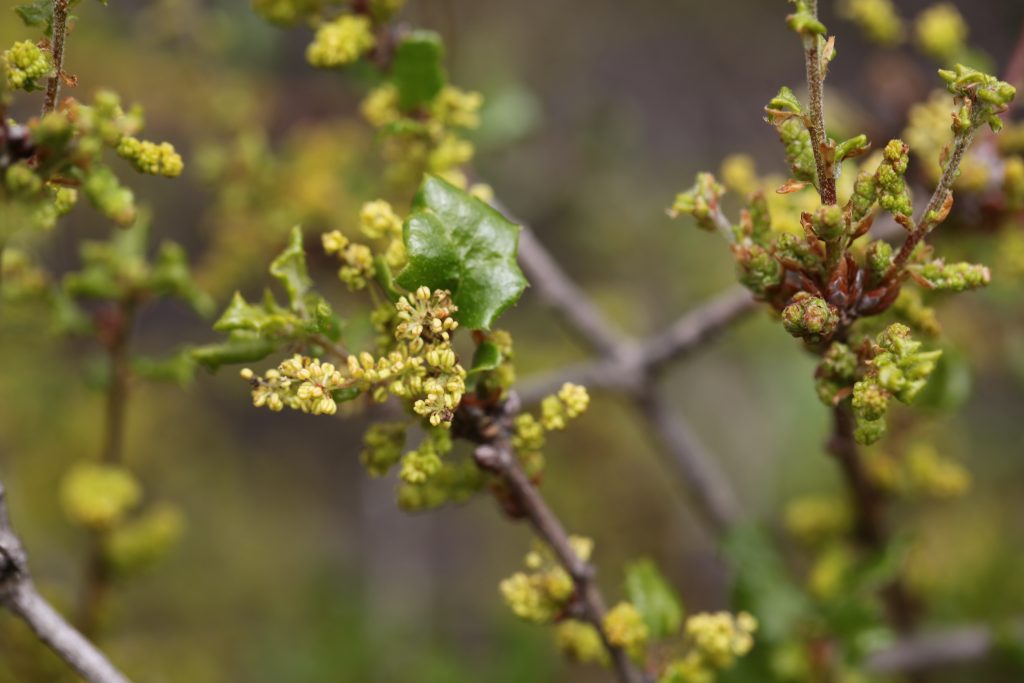
Lindera melissifolia enlarge
Photographer: Joe Ditto

Lindera melissifolia enlarge
Photographer: Joe Ditto


Lindera melissifolia is Fully Sponsored
Primary custodian for this plant in the CPC National Collection of Endangered Plants is: 
Kimberlie McCue, Ph.D. contributed to this Plant Profile. 

 
Lindera melissifolia


Pondberry is a pretty, medium sized shrub described by Steyermark (1963) as one of the rarest shrubs in the U.S. The plant flowers in early spring, before leafing out, and produces beautiful bright red fruits in late summer. Pondberry leaves are aromatic and have a strong lemon-sassafras aroma when crushed. This species is dioecious, meaning individual plants produce only male or only female flowers. However, once a male does not mean always a male. One plant growing at the Missouri Botanical Garden (MBG) apparently has changed sexes! After many years of producing only male flowers, the pondberry at MBG produced fruit! Botanists speculate that in the year the plant made the switch, some branches produced male flowers and some branches produced female flowers--hence the ability to produce fruit. Since that time, the plant has produced only female flowers.

 
Distribution & Occurrence

State Range
  Alabama
Arkansas
Florida
Georgia
Louisiana
Mississippi
Missouri
North Carolina
South Carolina
State Range of  Lindera melissifolia

Habitat
  Given its name, it is not surprising that Pondberry occurs in seasonally flooded wetlands, sandy sinks, pond margins and swampy depressions. In Arkansas and Missouri, Pondberry tends to occupy depressions that form natural swamps or ponds. Populations in North Carolina occur in soil with sandy sediments and high peat content, while in South Carolina the plants occur at the margins of limestone sinks and undrained shallow depressions. (USFWS 1993)

Overstory trees at Pondberry sites include, Quercus palustris, Acer rubrum var. drummondii and Liquidambar styraciflua. Also can be found with Pinus serotina and Pinus palustris.

Distribution
  Populations are scattered across the southeast U.S. The species is presumed extirpated in Florida, Louisiana, and Alabama. (Arkansas Natural Heritage Commission 2002)

Number Left
  Approximately 40 populations remain extant. The majority occur in Arkansas and Mississippi. A single wild population persists in southern Missouri. The number of stems in any given site varies from a few to several hundred.

Protection

Global Rank:  
G2G3
 
5/21/2008
Guide to Global Ranks
Federal Status:  
LE
 
7/31/1986
Guide to Federal Status
Recovery Plan:  
Yes
 
9/23/1993
 

State/Area Protection
  State/Area Rank Status Date  
  Alabama SH 3/29/1985  
  Arkansas S2 SE 7/7/1997  
  Florida SX LE 9/26/1988  
  Georgia S1 E 7/13/1995  
  Louisiana SR 12/2/1988  
  Mississippi S2 PE 3/30/1989  
  Missouri S1 E 5/1/2000  
  North Carolina S1 E 10/4/1991  
  South Carolina S1 FE/SE 5/1/2000  

Conservation, Ecology & Research

Ecological Relationships
  Unknown.

Threats
  • Habitat loss due to draining for agriculture or pine plantations
• Limited reproduction in the wild--many colonies are exclusively male

Current Research Summary
  • MBG collected male stems from the wild and are cultivating them ex situ as a pollen source for the one now-female plant at the Garden. With the production of seeds ex situ, further propagation studies will be conducted.
• Devall et al. (2001a & b) are studying the ecology and reproductive biology of this species.

Current Management Summary
  Several colonies of L. melissifolia are being protected in state parks, National Forests, or other public natural areas. An experimental population of Pondberry was established in Missouri on Missouri Department of Conservation property.

Research Management Needs
  • Prevent further loss of L. melissifolia habitat
• Study reproductive biology, seed biology, and seedling ecology
• Establish buffer zones around colonies in management areas

Ex Situ Needs
  • Protect the genetic resources of L. melissifolia by establishing seed banks and propagating plants ex situ
• Implement public education programs

References
 
Books (Single Authors)
 
2000. Missouri Plants of Conservation Concern. Jefferson City, MO: Conservation Commission of Missouri--Missouri Department of Conservation.
 
Coile, N.C. 2000. Notes on Florida's Regulated Plant Index (Rule 5B-40), Botany Contribution 38. Gainesville, Florida: Florida Dept. of Agriculture and Consumer Services, Division of Plant Industry.
 
Cooper, J.E.; Robinson, S.S.; Funderburg, J.B. 1977. Endangered and threatened plants and animals of North Carolina. Raleigh, NC.: North Carolina State Museum Natural History. 444p.
 
Radford, A.E.; Ahles, H.E.; Bell, C.R. 1968. Manual of the vascular flora of the Carolinas. Chapel Hill, NC: University of North Carolina Press. 1183p.
 
Steyermark, J.A. 1977. Flora of Missouri. Ames, IA: Iowa State University Press. 1728p.
 
Books (Sections)
 
Kartesz, J.T. 1999. A synonymized checklist of the vascular flora of the U.S., Canada, and Greenland. In: Kartesz, J.T.; Meacham, C.A., editors. Synthesis of the North American Flora, Version 1.0. North Carolina Botanical Garden. Chapel Hill, NC.
 
Conference Proceedings
 
Devall, M.; Schiff, N.; Boyette, D. Ecology and reproductive biology of pondberry (Lindera melissifolia [Walt.] Blume, Lauraceae), an endangered species. Botany 2001 "Plants and People"; August 12 - 16, 2001; Albuquerque Convention Center, Albuquerque, New Mexico. 2001.
 
Electronic Sources
 
(2002). Characterization of the Ashepoo-Combahee-Edisto (ACE) Basin, South Carolina--Species Gallery. Marine Resources Research Institute; South Carolina Department of Natural Resources; NOAA Coastal Services Center. http://www.csc.noaa.gov/acebasin/specgal/plants.htm. Accessed: 2002.
 
(2002). Rare and Vulnerable Plant Species of Oklahoma. Oklahoma Natural Heritage Inventory. http://www.biosurvey.ou.edu/candhome.html. Accessed: 2002.
 
USFWS. (1990). Endangered and Threatened Species Accounts. [Web page] U.S. Fish and Wildlife Service, Division of Endangered Species. http://ecos.fws.gov/servlet/TESSSpeciesQuery. Accessed: 2002.
 
Journal Articles
 
Conner, K; Schaefer, G; Donahoo, J; Devall, M; Gardiner, E; Hawkins, T; Wilson, D; Schiff, N; Hamel, P; Leininger, T. 2007. Development, fatty acid composition, and storage of drupes and seeds from the endangered pondberry (Lindera melissifolia). Biological Conservation. 137, 4: 489-496.
 
Devall, M.; Schiff, N.; Boyette, D. 2001. Ecology and reproductive biology of the endangered Pondberry Lindera melissifolia (Walt) Blume. Natural Areas Journal. 21: 250-258.
 
Godt, M.J.W.; Hamrick, J.L. 1996. Allozyme diversity in the endangered shrub Lindera melissifolia (Lauraceae) and its widespread congener Lindera benzoin. Canadian Journal of Forest Research. 26, 12: 2080-2087.
 
Korte, P.A.; Fredrickson, L.H. 1977. Loss of Missouri's lowland hardwood ecosystem. Transcripts of the North American Wildlands Natural Resources Conference. 42: 31-41.
 
Morgan, S.W. 1983. Lindera melissifolium; A Rare Southeastern Shrub. Natural Areas Journal. 3, 4: 62-67.
 
Morris, . 1986. Scientific Notes: Lindera mellissifolia in Mississippi. Castanea. 51, 3: 226.
 
Peck, J.H.; Peck, C.J.; Taylor, W.C. 1987. New locations for pondberry (Lindera melissifolia) in Arkansas. Proceedings of the Arkansas Academy of Science. 41: 114.
 
Steyermark, J.A. 1949. Lindera mellissaefolia. Rhodora. 51, 608: 153-163.
 
USFWS. 1985. Proposed Endangered Status for Lindera mellissifolia (Pondberry). Federal Register. 50, 156: 32581-32584.
 
USFWS. 1985. Protection Sought for Four Vulnerable Plants. Endangered Species Technical Bulletin. 10, 9: 1, 8-9.
 
USFWS. 1986. Determination of endangered status for Lindera melissifolia. Federal Register. 51, 147: 27495-27500.
 
Magazine Articles
 
Rogers, G. 1988. Native Plants. Missouri Native Plant Society: 5. 1. 1-2.
 
Newspaper Articles
 
Seabrook, C. 1986 Tuesday, April 15. Where have all these flowers gone?. The Atlanta Constitution; Atlanta, GA. Science/Medicine. 10-B.
 
Reports
 
2002. Rare Plant Fact Sheet. Little Rock, Arkansas: Arkansas Natural Heritage Commission. p.2.
 
Sutter, R.D.; Frantz, V.; McCarthy, K.A. 1987. Atlas of rare and endangered plant species in North Carolina. Raleigh, NC: North Carolina Dept. Agriculture, Plant Protection Section, Conservation Program. p.174.
 
USFWS. 1993. Recovery plan for pondberry (Lindera melissifolia). Atlanta, Georgia: U.S. Fish & Wildlife Service, Southeast Region. p.56.
 

This profile was updated on 11/30/2009
Search for other Plant Profiles


California Oregon Washington Idaho Nevada Arizona utah Montana Wyoming Colorado New Mexico North Dakota South Dakota Nebraska Kansas Oklahoma Texas Minnesota Iowa Missouri Arkansas Louisiana Wisconsin Illinois Michigan Michigan Indiana Ohio Kentucky Tennessee Mississippi Alabama Florida Georgia South Carolina North Carolina Virginia West Virginia Pennsylvania Delaware Maryland New Jersey Connecticut Rhode Island Masachusetts Vermont New Hampshire Maine New York New York Hawaii Hawaii Hawaii Hawaii Profile Image Profile Image