CPC National Collection Plant Profile

Hymenoxys texana

Photographer:
Stephen M. Young

Heading for profile page
CPC Home Join now
About CPC
CPC National Collection
Conservation Directory Resources
Invasive Plant Species Plant News
Plant Links Participating Institutions
Contribute
Search CPC
Search    Alphabetical List    Reference Finder    CPC Home


CPC National Collection Plant Profile

Hymenoxys texana


Family: 
Asteraceae  
Common Names: 
prairie dawn, Texas bitterweed
Author: 
(Coult. & Rose) Cockerell
CPC Number: 
2296

Distribution
Protection
Conservation
References
Profile Links
 ITIS
 Tropicos
 PLANTS
 Fish & WildLife

Hymenoxys texanaenlarge
Photographer: Stephen M. Young

Hymenoxys texanaenlarge
Photographer: Stephen M. Young


Hymenoxys texana is Fully Sponsored
Primary custodian for this plant in the CPC National Collection of Endangered Plants is: 
Dave Berkshire contributed to this Plant Profile.

 
Hymenoxys texana


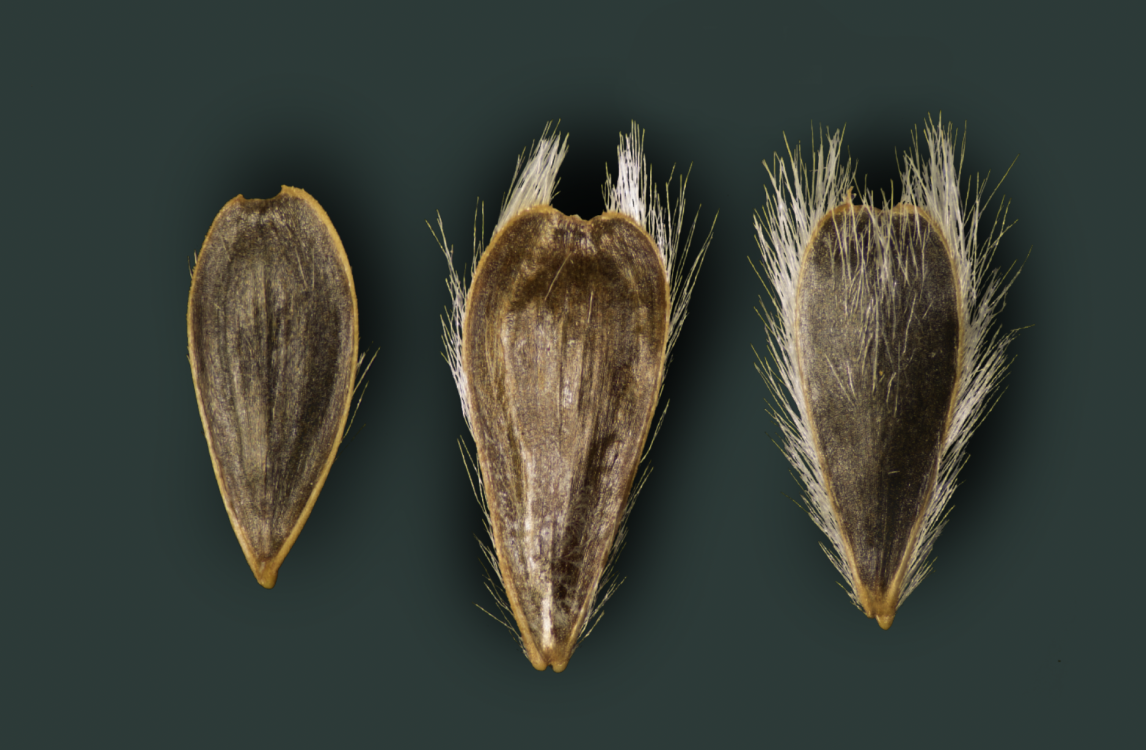
Prairie dawn is a member of the sunflower family, but this small annual only reaches a height of seven inches and so is often overlooked. This plant is found only in the open grasslands of the northern part of the Gulf Prairie region of Harris and Fort Bend Counties of Texas. In late winter its oblong, somewhat fleshy leaves cluster at the plant base and in late February to April a small (0.15-0.23 inch long) round head of yellow disk flowers appears. The minute ray flowers are concealed by the bracts. The plant sets seeds from April to May and dies before the bare ground dries and cracks in the summer heat. The seeds are cone-shaped and hairy. (Stark 1996).

Prairie Dawn was first collected near Hockley in Harris County, Texas in 1889. Thought to be extinct (Correll and Johnston 1979), the plant was rediscovered north of Cypress in Harris County in 1981 by James Kessler (Mahler 1982 & 1983).

Distribution & Occurrence

State Range
  Texas
State Range of  Hymenoxys texana
Habitat
  Grows within a narrow range of soil and site conditions in the open grasslands of the northern part of the Gulf Prairie region. Slick areas composed of fine-sandy compacted soil occur in seasonally wet depressions or saline swales at the periphery of low mounds termed mima or pimple mounds (Stark 1996). The upper 7 inches of the soils, in the Narta soil series, are poorly drained and are powdery when dry and sticky and soft when wet. These soils are often saline and moderately alkaline. Little water is available to plant roots beyond the upper 7 inches. Plants endure soil conditions ranging from saturated during the winter to droughty in the summer. Hymenoxys texana also persists in the low areas of abandoned rice fields, vacant lots, and pastures where mima mounds have been bulldozed and natural vegetation has returned. Prairie Dawn does not colonize recently disturbed soils and is susceptible to competition.

Plants that grow in association with Prairie Dawn include Short-spike Windmillgrass, the rare Texas Windmillgrass, Gulf Cordgrass, Whorled Dropseed, Filly Panicum, Little Barley, Annual Bentgrass, Bearded Flatsedge, False Onion, Bottlebrush Plantain, Pepperweed, Sandparsley, the rare Houston Camphor Daisy, Western Dwarf-dandelion, Chaffweed, Golden Hedgehyssop, Common evax, Prairie Flameflower, Purslane, Wine-cup, Cotton-flower, Silky Evolvulus and Bracted Sida (Stark 1996).

Distribution
  Endemic to the Gulf Coastal Prairie of Harris, Fort Bend and Trinity Counties, Texas.

Number Left
  Since 1986, populations found in Harris and Fort Bend Counties may total ~ 50 sites comprising an unknown number of individuals (Stark 1996).

Protection

Global Rank:  
G2
 
1/16/2002
Guide to Global Ranks
Federal Status:  
LE
 
3/13/1987
Guide to Federal Status
Recovery Plan:  
Yes
 
4/13/1990

State/Area Protection
  State/Area Rank Status Date  


Conservation, Ecology & Research

Ecological Relationships
  Changes in soil salinity and acidity occur in these areas as result of the fluctuating water table. Blue-green alga, Nostoc, often covers the barren or sparsely vegetated microhabitats where Prairie Dawn is found. Prairie Dawn and other annuals that persist in these conditions complete their life cycles during the favorable conditions in early Spring. (Stark 1996).

Threats
  • Competition from woody vegetation
• heavy grazing by cattle and primarily,
• urban development (road construction and residential development) of the Coastal Prairies, especially within the Houston city limits where these plants are found.

Current Research Summary
  • Genetic studies completed by L. Brown and J.L. Strother (1988) documented disploidy, 2N= 16 and 6 in Hymenoxys texana.
• Germination and growth to maturity studies at Mercer Arboretum and Botanic Gardens in 1988-89 revealed non-specific soil requirements and ease of cultivation. Seedlings, however, do not tolerate extended periods of submerging.
• Public educational display plants for the Endangered Species Garden at Mercer are germinated within our greenhouses. The Endangered Species Garden established in 1994 with support from Star Enterprises displays rare native plants for the public to view year-round. In Spring 2002, the River Oaks Garden Club of Houston, TX provided a generous gift to begin the expansion and renovation of Mercer’s Endangered Species Garden. Plants produced for educational display gardens or for specific restoration and reintroduction projects are produced within Mercer’s nursery greenhouses and within our Conservation Area. The Conservation Area provides secure, raised beds for mass propagation of plants/seeds. Each bed is provided with independently controlled irrigation and substrates that meet the unique requirements for each species.
• Seeds from several sites within Harris County collected by Dr. Larry Brown of Houston Community College and Ralph Taylor of the Harris County Flood Control District are stored at Mercer Arboretum and Botanic Gardens. Banked wild-collected seed date to 1988. Mercer also banks subsets of rare seeds collected from field surveys and from propagation work with our collaborating CPC institution, the Lady Bird Johnson Wildflower Center, Austin, TX and the National Center for Genetic Resources Preservation (NCGRP) in Ft. Collins, CO (formerly called the National Seed Storage Laboratories.
• Seeds from an in-house propagation of 1993 that had been in storage in Mercer's seed bank freezer germinated under greenhouse conditions at ~70% with ~50% survivorship during the Winter of 2001. Plants germinated in our greenhouses are used for display in our Endangered Species Garden and Mercer's Plaza and displays for off-site conservation programs given by Mercer.

http://www.cp4.hctx.net/mercer/mplant.htm. This article appeared in Harris County Precinct 4 magazine, Parkscape, Autumn 2001 and reached 33,000 possible readers. Harris County Precinct 4 magazine, Parkscape publishes public information articles about the plant conservation efforts of Mercer Arboretum and Botanic Gardens. 115,000 issues are circulated annually of this quarterly publication. Articles about rare plants maintained at Mercer may be viewed at: http://www.cp4.hctx.net/mercer/mplant.htm.

Current Management Summary
  Semi-protected on 2 sites with a good possibility for management. Current management includes monitoring and seasonal mowing/burning of sites where possible.

Research Management Needs
  • Further develop protected sanctuaries within Harris and Ft. Bend Counties.

Monitoring Efforts
  Not Available

Ex Situ Needs
  • Expand seed bank.
• Propagation of seed for reintroduction efforts.

References

Books (Single Authors)

Correll, D.S.; Johnston, M.C. 1970. Manual of the vascular plants of Texas, 1676-80. Texas Research Foundation.

Correll, D.S.; Johnston, M.C. 1970. Manual of the vascular plants of Texas. Renner: Texas Research Foundation. 1881p.

Lowe, D.W.; Matthews, J.R.; Moseley, C.J. 1990. The official World Wildlife Fund guide to endangered species of North America. Vol. 1. Washington, D.C. Beacham Publishing.

Poole, J.M.; Carr, W.R.; Price, D.M.; Singhurst, J.R. 2007. Rare Plants of Texas. College Station, TX. Texas A&M University Press. 640p.

Poole, J.M.; Riskind, D.H. 1987. Endangered, threatened, or protected native plants of Texas. Austin, TX: Texas Parks Wildlife Department.

Tveten, J.L.; Tveten, G.A. 1993. Wildflowers of Houston. Houston, Texas: Rice University Press. 309p.

Books (Sections)

Kartesz, J.T. 1999. A synonymized checklist of the vascular flora of the U.S., Canada, and Greenland. In: Kartesz, J.T.; Meacham, C.A., editors. Synthesis of the North American Flora, Version 1.0. North Carolina Botanical Garden. Chapel Hill, NC.

Electronic Sources

Tiller, A.A. (2001). The Rare Houston Camphor Daisy. Mercer Arboretum & Botanic Gardens. http://www.hcp4.net/mercer/conservations/articles/camphordaisy.htm. Accessed: 2002.

Journal Articles

Bierner, M.W. 1994. Submersion of Dugaldia and Plummera in Hymenoxys (Asteraceae: Heliantheae: Gaillardiinae). Sida. 16: 1-8.

Bierner, M.W.; Jansen, R.K. 1998. Systematic implications of DNA restriction site variation in Hymenoxys & Tetraneuris (Asteraceae: Heleniae: Gaillardiinae). Lundellia. 1: 17-26.

Bierner, M.W.; Jansen, R.K. 1998. Systematic implications of DNA restrictions site variation in Hymenoxys and Tetraneuris (Asteraceae, Helenieae, Gaillardiinae). Lundellia. 1: 17-26.

Cockerell, T.D.A. 1904. The North American species of Hymenoxys. Bull. Torrey Bot. Club. 31: 461-509.

Cory, V.L. 1936. New names & new combinations for Texas plants. Rhodora. 38: 404-408.

Gao, F.; Wang, H.; Mabry, T.J. 1990. Inositol derivatives and pseudoguaianolides from Hymenoxys texana. Phytochemistry. 29, 7: 2273-2276.

Greene, E.L. 1898. Some Helenioid genera: Rydbergia, Picradenia, Pittonia. Studies in the Compositae. VII. 1. 3: 270-273.

Kessler, J.W.; Hatch, S.L. 1984. Chromosome number reports LXXXII edited by A. Love. Taxon. 33: 126-34.

Mahler, W.F. 1983. Rediscovery of Hymenoxys texana and notes on two other Texas endemic. Sida. 10, 1: 87-91.

Sitton, D.M. 2000. Mercer Arboretum and Botanic Gardens. Texas Highways--The Travel Magazine of Texas. 47, 3: 44-49.

Spring, O.; Zitterell-Haid, B.; Bierner, M.W.; Mabry, T.J. 1994. Chemistry of Glandular Trichomes in Hymenoxys and Related Genera. Biochemical Systematics and Ecology. 22, 2: 171-195.

Strother, J.L.; Brown, L.E. 1988. Dysploidy in Hymenoxys texana (Compositae). American Journal of Botany. 75: 1097-1098.

USFWS. 1985. Final Protection Given to Eight Plants. Endangered Species Technical Bulletin. 10, 4: 5-7.

USFWS. 1985. Proposal to Determine Hymenoxys texana to be an Endangered Species. Federal Register. 50, 44: 9095-9097.

USFWS. 1986. Determination of Endangered Status of Hymenoxys texana. Federal Register. 51, 49: 8681-8683.

USFWS. 1986. Protection Given to Seven Species. Endangered Species Technical Bulletin. 11, 4: 1, 4-6.

Newspaper Articles

Fannon, C. 2003 Winter. Prairie Dawn. Native Times, the Newsletter for the Houston Chapter of the Native Plant Society of Texas; Houston, Texas. 1-2.

Reports

Bridges, E.L. 1988. Endangered species information system species workbook: Hymenoxys texana. Albuquerque, New Mexico: U.S. Fish & Wildlife Service.

Mahler, W.F. 1982. Status report [on Hymenoxys texana]. Albuquerque, New Mexico: U.S. Fish & Wildlife Service. p.10.

Stark, P. 1996. Federally and State Endangered Texas Prairie Dawn (Hymenoxys texana). Texas Parks and Wildlife Department. PWD LF R3000-019F.

USFWS. 1989. Hymenoxys texana recovery plan. Albuquerque, New Mexico: U.S. Fish and Wildlife Service. p.53.


  This profile was updated on 3/4/2010
California
Oregon
Washington
Idaho
Nevada
Arizona
Utah
Montana
Wyoming
Colorado
New Mexico
North Dakota
South Dakota
Nebraska
Kansas
Oklahoma
Texas
Minnesota
Iowa
Missouri
Arkansas
Louisiana
Wisconsin
Illinois
Michigan
Michigan
Indiana
Ohio
Kentucky
Tennessee
Mississippi
Alabama
Florida
Georgia
South Carolina
North Carolina
Virginia
West Virginia
Pennsylvania
Delaware
Maryland
New Jersey
Connecticut
Rhode Island
Massachusetts
Vermont
New Hampshire
Maine
New York
New York
Hawaii
Hawaii
Hawaii
Hawaii