|
Conserving and restoring
America's native plants |
|
CPC National Collection Plant Profile
|

|
|
Hibiscus dasycalyx
| Family: |
Malvaceae (Mallow Family) |
| Common Name: |
Neches River rose-mallow |
| Author: |
Blake & Shiller |
| Growth
Habit: |
Perennial |
| CPC
Number: |
2258 |
|
| |
| Primary
custodian for this plant in the CPC National Collection of Endangered
Plants is: |
| |
| Dave Berkshire contributed to this Plant Profile. |
Hibiscus dasycalyx
|
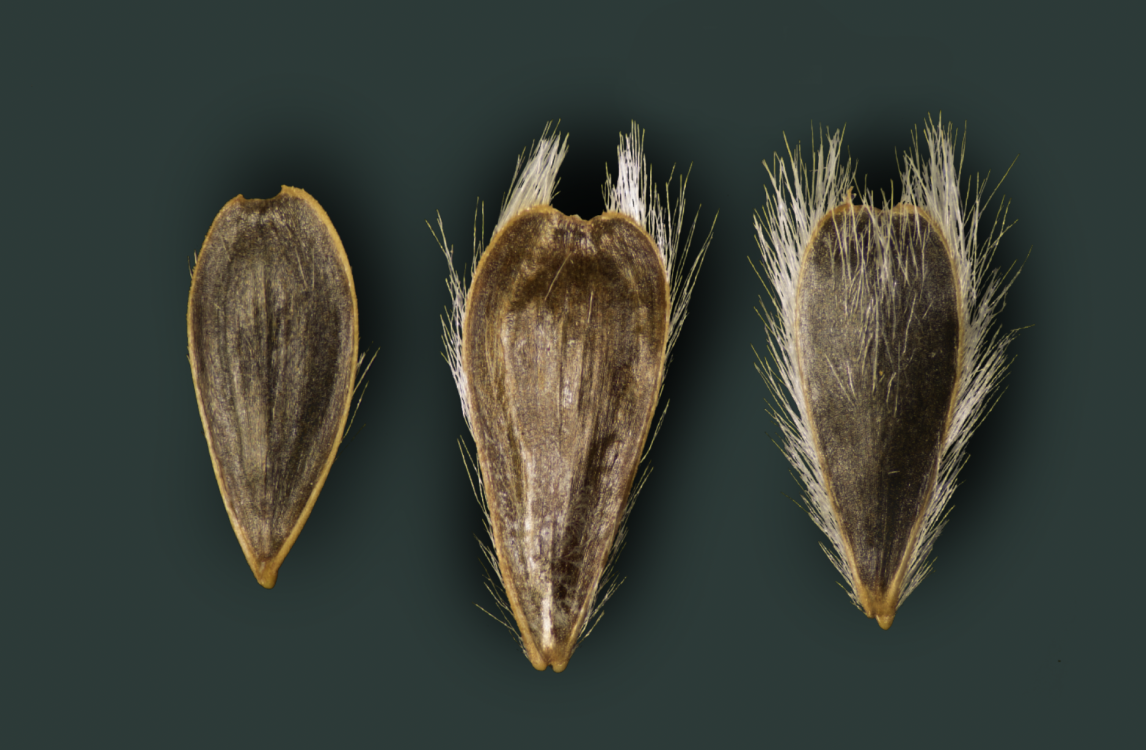
The Neches River rose mallow is a federally listed candidate endangered native Hibiscus that now only exists in three wetlands in E. Texas. This Hibiscus has delicate slender finely divided leaves on long, arching 3-7 foot long stems. The creamy white flowers are 3-6 inches wide with dark burgundy eyes, bear five 2-4 inch long petals and appear from June through August. Occasionally the flowers bear pink petals. Plants often bloom into October depending upon water availability. This Hibiscus is distinguished from other native Hibiscus in that its flower has a densely pubescent calyx and bracteoles and its mature seeds are densely pubescent as well. Budding and leafing normally occur late March-April and fruits are present from July through November.
| Distribution
& Occurrence |
|
State Range
Habitat
| |
Found in East Texas Prairie wetlands in areas of open sun. Populations are generally located within floodplains of permanent streams or rivers (Angelina, Neches and Trinity Rivers), etc. that flood at least once a year. Bases of plants normally in standing water early in the growing season, with water levels dropping, but never drying out completely until late in the growing season. Some populations remain wet throughout much of the year. Groundwater is no more than 5 feet below the surface (Nemec, 2000a-c). Occurs in the marshes along Neches River, borrow pits along highway and in hydric soils in marshland complexes. |
Distribution
| |
Found in East Texas grassland wetland areas of Cherokee, Harrison (?), Houston and Trinity Counties, Texas. |
Number Left
| |
This federal candidate species will likely be listed at some point in the future. Presently, three confirmed populations exist. In 1999, two sites one bearing 8 plants, the other 200 plants in Houston County. Trinity County held three sites in 1999 at 35 plants, 17 plants and 300 plants. One plant exists in Cherokee county although more plants (pending ID) may exist in this site (Nemec 2000c). One possible location in Harrison Co. (this is from a herbarium specimen-may not still be extant, location is vague). Four total sites were listed for year 2000, with one protected by a conservation agreement in Trinity County (Nemec, 2000c). |
State/Area
Protection
| |
State/Area |
Rank |
Status |
Date |
|
| |
Texas |
S1 |
|
4/2/1985 |
|
| Conservation,
Ecology & Research |
|
Ecological
Relationships
| |
Seeds are buoyant in water for several hours and thus aid in dispersal of the species.
Genus is host plant for Hairstreak butterflies. |
Threats
| |
All known populations exist on private lands or within State highway right-of-way, except for recent reintroduction into National Forest lands.
Habitat has been impacted by drainage or filling of floodplain depressions and oxbows.
Stream channelization.
Road construction.
Streambank brush clearing by highway department and electric company.
Herbicide use along powerline rights-of-way.
Habitat alteration for waterfowl.
Timber harvesting.
Agricultural activities: mowing, grazing and herbicide use.
Severe insect herbivory has been reported, although plants produce a second crop of leaves to replace any lost early in the season.
Hybridizes readily with more common and weedy Hibiscus species, H. laevis. As this species is a candidate species, maintenance of genetic integrity, documentation of provenance and gene banking is essential. Commercial trade may introduce genetic impurities into the species. |
Current Research Summary
| |
This species is easily propagated by cuttings or germination.
Mercer staff and volunteers maintain as a permanent educational exhibit of Neches River Rose Mallow within our Endangered Species Garden. The Endangered Species Garden, established in 1994 with support from Star Enterprises, displays rare native plants for the public to view year-round. In Spring 2002, the River Oaks Garden Club of Houston (ROGC), TX provided a generous gift to begin the expansion and renovation of Mercers Endangered Species Garden.
Mercer Arboretum and Botanic Gardens maintains a seed bank of this species. Banked wild-collected seed of this species date to 1993. Mercer also banks subsets of rare seeds collected from field surveys and from propagation work with our collaborating CPC institution, the Lady Bird Johnson Wildflower Center, Austin, TX and the National Center for Genetic Resources Preservation (NCGRP) in Ft. Collins, CO (formerly called the National Seed Storage Laboratories).
Plants produced for educational display gardens or for specific restoration and reintroduction projects are produced within Mercers nursery greenhouses and within our Conservation Area. The Conservation Area provides secure, raised beds for mass propagation of plants/seeds. Each bed is provided with independently controlled irrigation and substrates that meet the unique requirements for each species. Populations are propagated separately to insure genetic purity. |
Current Management Summary
| |
Management agreements have been developed for right-of-ways site in Trinity County (Nemec 2000c).
Reintroductions of ~700 of these plants into David Crockett National Forest, Trinity County, occurred in April of 2000. Dr. David Creech, staff and students of Stephen F. Austin State University, Nacogdoches, TX propagate this species for reintroduction. Excellent survival & flowering occurred in summer 2000. |
Research Management Needs
| |
Research into biology and ecology of the plants will facilitate future reintroductions.
Avoid site disturbances that affect drainage of the sites or conversion of sites for agricultural, urban or highway development.
Continue genetic research (Klips 1995). Interspecific hybridization, namely with H. laevis (syn: H. militaris), needs to be addressed. As this species is a candidate species, maintenance of genetic integrity, documentation of provenance and gene banking is essential. |
Monitoring Efforts
Ex Situ Needs
| |
Expand seed bank.
Rescue and maintain populations under threat.
As this species is a candidate species, maintenance of genetic integrity, documentation of provenance and gene banking is essential. |
|
| Books (Single Authors)
|
| |
| Correll, D.S.; Correll, H.B. 1972. Aquatic and wetland plants of southwestern United States. Stanford, California: Stanford University Press. 1777p. |
| |
| Correll, D.S.; Correll, H.B. 1975. Aquatic and wetland plants of southwestern United States, 2 vols. Stanford, Calif.. Stanford University Press. |
| |
| Correll, D.S.; Johnston, M.C. 1970. Manual of the vascular plants of Texas. Renner: Texas Research Foundation. 1881p. |
| |
| Nixon, E.S.; Cunningham, B.L. 1985. Trees, shrubs, and woody vines of East Texas. Nacogdoches, TX: B.L. Cunningham Productions. 240p. |
| |
| Poole, J.M.; Carr, W.R.; Price, D.M.; Singhurst, J.R. 2007. Rare Plants of Texas. College Station, Texas. Texas A&M University Press. 640p. |
| |
| Books (Sections)
|
| |
| Holser, R.A.; Bost, G.A. 2002. Extraction of Lipid components from seeds of perennial & woody Hibiscus species by supercritical carbon dioxide. In: J. Janek & A. Whipkey, editor. Trends in New Crops & New Uses. ASHS Press. Alexandria. VA. p550-55. |
| |
| Kartesz, J.T. 1999. A synonymized checklist of the vascular flora of the U.S., Canada, and Greenland. In: Kartesz, J.T.; Meacham, C.A., editors. Synthesis of the North American Flora, Version 1.0. North Carolina Botanical Garden. Chapel Hill, NC. |
| |
| Conference Proceedings
|
| |
| Poole, J.; Janssen, G.K. Managing and Monitoring Rare and Endangered Plants on Highway Rights-of-way in Texas. Gen. Tech. Rep. RM-GTR-283. Proceedings of the Southwestern Rare and Endangered Plant Conference; September 11-14; Flagstaff, AZ. In: Maschinski, J.; Hammond, H.D.; Holter, L., editors. 1996. USDA and US Forest Service. p 8-12. |
| |
| Electronic Sources
|
| |
| Carr, W.R.; Orzell, S.; Poole, J.M. (1999). Texas Natural Heritage Program element occurence records. Texas Parks and Wildlife Department. Endangered Resources Branch. Austin,TX. |
| |
| SFA. (2002). Rare, Threatened, and Endangered Plants. Stephen F. Austin State University, SFA Station, Nacogdoches, TX. http://www.sfasu.edu/AG/arboretum/pnpc/rrr/Gaillardia%20aestivalis.htm. Accessed: 2002. |
| |
| Journal Articles
|
| |
| Blake, S.F. 1958. Two species of Hibiscus from Texas. Journal of the Washington Academy Science. 48, 9: 277-278. |
| |
| Creech, D. 1996. In support of biodiversity. Amer. Nurseryman. 184: 38-43. |
| |
| Creech, D. 1996. Research with Native Plants: What the Universities are Doing. Restoration and Management Notes. 14, 2: 192. |
| |
| Creech, D.; Parrish, D.; Clack, B. 1999. Saving the Neches River Rose Mallow, Hibsicus dasycalyx. Native plant Society of Texas News. 17, 3: 1-3. |
| |
| Gitzendanner, M.A.; Soltis, P.S. 2000. Patterns of genetic variatio in rare & widespread congeners. Amer. J. Bot. 87: 783-92. |
| |
| Klips, R.A. 1995. Genetic affinity of the rare eastern Texas endemic Hibiscus dasycalyx; (Malvaceae). American Journal of Botany. 82: 1463-1472. |
| |
| Klips, R.A. 1995. Inbreeding Depression, Autonomous Self-Pollination, and the Genetic Affinities of a Rare Taxon Within the Rose-Mallow, Hibiscus Section muenchhusia. Dissertation Abstracts International. 56-04, Section: B: 1778. |
| |
| MacRoberts, M.H.; MacRoberts, B.R.; Sorrie, B.A.; Evans, R.E. 2002. Endemism in the West Gulf Coastal Plain: Importance of xeric habitats. Sida. 20: 767-80. |
| |
| McMahan, L.R. 1988. Tale of Two Mallows: Neches river rose mallow. Center for Plant Conservation Newsletter. 3, 4 |
| |
| Scott, S.E.; Creech, D. 1997. Saving the rare Neches river rose mallow, Hibiscus dasycalyx. Native Plant Society of Texas News. 15, 1: 10. |
| |
| Smith, E.; Creech, D. 1995. A propagation and reintroduction strategy for the Neches River Rose Mallow, Hibiscus dasycalyx. Hortscience. 30, 4: 805. |
| |
| USFWS. 2005. Endangered & threatened wildlife & plants; review of native species that are candidates or proposed for listing as endangered or threatened; annual notice of findings on resubmitted petitions; annual descriptions of progress on listing actions; propsed ru. Fed. Reg. 70 (90): 24870-934. |
| |
| Reports
|
| |
| Kennedy, K.; Poole, J.; Orzell, S. 1990. Status report on Hibiscus dasycalys (Neches River rose-mallow). Albuquerque, NM: U.S. Fish & Wildlife Service. p.32. |
| |
| Nemec, K. 2000. Candidate and Priority Listing Form. Houston, Texas: U.S. Fish and Wildlife Service. Clear Lake Lead Office. |
| |
| Nemec, K. 2000. Do you have the Neches River Rose-mallow Hibiscus dasycalyx. Houston, Texas: U.S. Fish and Wildlife Service. Clear Lake Lead Office. |
| |
| Nemec, K. 2000. Neches River Rose Mallow Hibiscus dasycalyx. Houston, Texas: U.S. Fish and Wildlife Service. Clear Lake Lead Office. |
| |
| Nemec, K. 2003. Candidate assessment & listing priority assignment form. Clear Lake, Texas. USFWS. |
| |
| Ogorzaly, M.D. 1986. Color Illustrations of rare plants. In Natural Heritage of Texas map. Austin, TX. General Land Office & Texas Natural Heritage Program. |
| |
| SABG. 1990. Native endangered species propagation: Hibiscus dasycalyx. Austin, TX: Unpublished Report by San Antonio Botanical Garden to the Texas Natural Heritage Program Files, Texas Parks and Wildlife Department, Endangered Resources Branch. |
| |
| Warnock, M.J. 1995. Status report on Hibiscus dasycalyx (Neches River rose-mallow). Cleark Lake, TX: U.S. Fish & Wildlife Service. p.40. |
| |
| Theses
|
| |
| Blanchard, O.J., Jr. 1976. A revision of species segregated from Hibiscus sect. Trionum (Medicus) de Candolle sensu lato (Malvaceae). [Ph.D. Thesis]: Cornell University. Ithaca, NY. |
| |
| Conner, M.D. 1979. The endangered plants of Texas. [Masters]: University of Texas. Austin, Texas. . punknown. |
| |
| Scott, S.E. 1997. The Horticultural Treatment and Introduction of a Rare Wetland Plant: Neches River Rose-Mallow (Hibiscus dasycalyx). [Masters Thesis]: Stephen F. Austin State University. Nacogdoches, Texas. |
| |
|