CPC National Collection Plant Profile

Hackelia venusta

Photographer:
Ed Guerrant

Heading for profile page
CPC Home Join now
About CPC
CPC National Collection
Conservation Directory Resources
Invasive Plant Species Plant News
Plant Links Participating Institutions
Contribute
Search CPC
Search    Alphabetical List    Reference Finder    CPC Home


CPC National Collection Plant Profile

Hackelia venusta


Family: 
Boraginaceae  
Common Name: 
Showy stickseed
Author: 
(Piper) St. John
Growth Habit: 
Perennial
CPC Number: 
2109

Distribution
Protection
Conservation
References
Profile Links
 ITIS
 Tropicos
 PLANTS
 Fish & WildLife
 Forest Service

Hackelia venustaenlarge
Photographer: Ed Guerrant

Hackelia venustaenlarge
Photographer: Jim Barrett


Hackelia venusta is Fully Sponsored
Primary custodian for this plant in the CPC National Collection of Endangered Plants is: 
Edward Guerrant, Ph.D. contributed to this Plant Profile.

 
Hackelia venusta


Hackelia venusta makes up for its short stature, being only 8-16 in. (20-40) cm tall, by a splashy display of large, showy white flowers. This beautiful plant is the rarest in Washington, found at only one site in the entire state, and nowhere else in the world. The Showy stickseed is restricted to an area of less than two and a half acres on a slope within 330 feet (100 m) of a major state highway. The slope that they grow on is extremely unstable, and susceptible to landslides and disturbance by hikers and potential plant collectors, or even those only wanting to take photographs.

Only two populations of true Hackelia venusta have ever been found, within about 12 mi. (20 km) of each other in Chelan County, Washington. The plant was first discovered in 1920 in Tumwater Canyon. In 1948 an occurrence of Hackelia venusta was reported near Merrit, Washington, but recent efforts to relocate this site have been unsuccessful. Changes in land-use have most likely caused the extirpation of the plants in this area (USFWS 2000).

The sole remaining population is at the original discovery site. Although the population is still present, it has exhibited a clear downward trend over recent years. A survey in 1968 estimated that the population covered "a few hundred acres." In 1981, this population contained 800-1000 individuals. By 1984, only 400 were observed, covering 12 acres. Presently only 150 individuals remain in this population with a few additional individuals scattered along the State Highway (USFWS 2000).

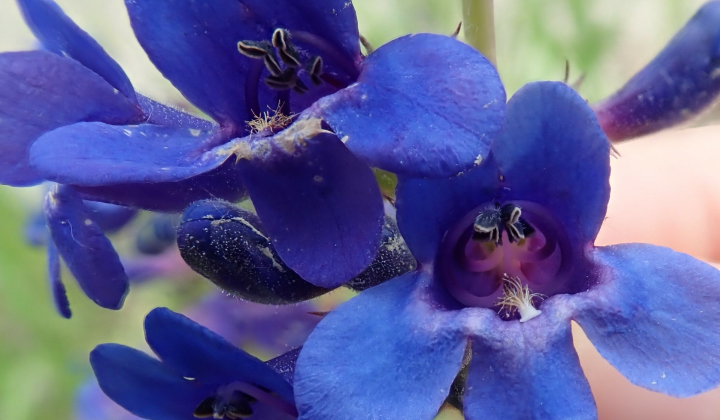
Three populations of what was considered to be H. venusta were found high in the mountains, at elevations near 6,300-7,400 ft (1,920-2,255 m). Questions arose as to whether they could be considered the same species. They were observed to be shorter in stature and had smaller, blue tinged flowers. Due to the distance between the populations and differences in flowering time, the blue and white forms are incapable of naturally interbreeding (US Fish and Wildlife Service, 2000). Observations and genetic studies have indicated that they are indeed different species. The blue form has recently been named H. taylori. A major landslide completely destroyed one of the three populations in 1994 or 1995. Although H. taylori is now only found at two locations, it has not yet been listed as threatened or endangered.

Distribution & Occurrence

State Range
  Washington
State Range of  Hackelia venusta
Habitat
  Hackelia venusta grows on steep slopes (25-70 degrees) composed of loose, well-drained granitic sand and broken rocks at an elevation of approx. 1600 to 2500 ft (480 -765 m) in the dry eastern slopes of the Washington Cascades. The plants grow in openings within the Ponderosa pine and Douglas-fir forests which are maintained by occasional wildfires.

Distribution
  Tumwater Canyon in the eastern Cascades in Washington.

Number Left
  As of 2000: Only one population with fewer than 150 individuals (USFWS 2000).

Protection

Global Rank:  
G1
 
2/16/2000
Guide to Global Ranks
Federal Status:  
LE
 
2/6/2002
Guide to Federal Status
Recovery Plan:  
No
 

State/Area Protection
  State/Area Rank Status Date  
   

Conservation, Ecology & Research

Ecological Relationships
  Hackelia venusta is shade intolerant, growing in the openings of ponderosa pine (Pinus ponderosa) and Douglas-Fir (Pseudotsuga menziesii) forests. The loose, rocky soil characteristically supports little competing vegetation and contains low levels of soil-organic matter. This early successional habitat is maintained by occasional burning and minor habitat disturbances. In the past 100 years, there have been great efforts to control or eradicate forest fires. The suppression of fire has hurt this population by allowing trees and shrubs to flourish causing shading and crowding of the showy stickseed. The loss of suitable habitat is the primary cause of the decrease in population numbers. Without occasional fires, organic material may accumulate to such levels as to result in hotter burning fires. A fire now would be very detrimental to the population, as these hot fires are capable of destroying everything in their path. A hot burning fire will damage the root of the plant, leading to plant death, whereas a cooler burning fire would only damage the above ground portions of the plant, allowing it to grow back the following year. Large, hot burning fires could also increase the likelihood of a major landslide by destroying the root structure of the plants that normally stabilize the soil. (USFWS 2000)

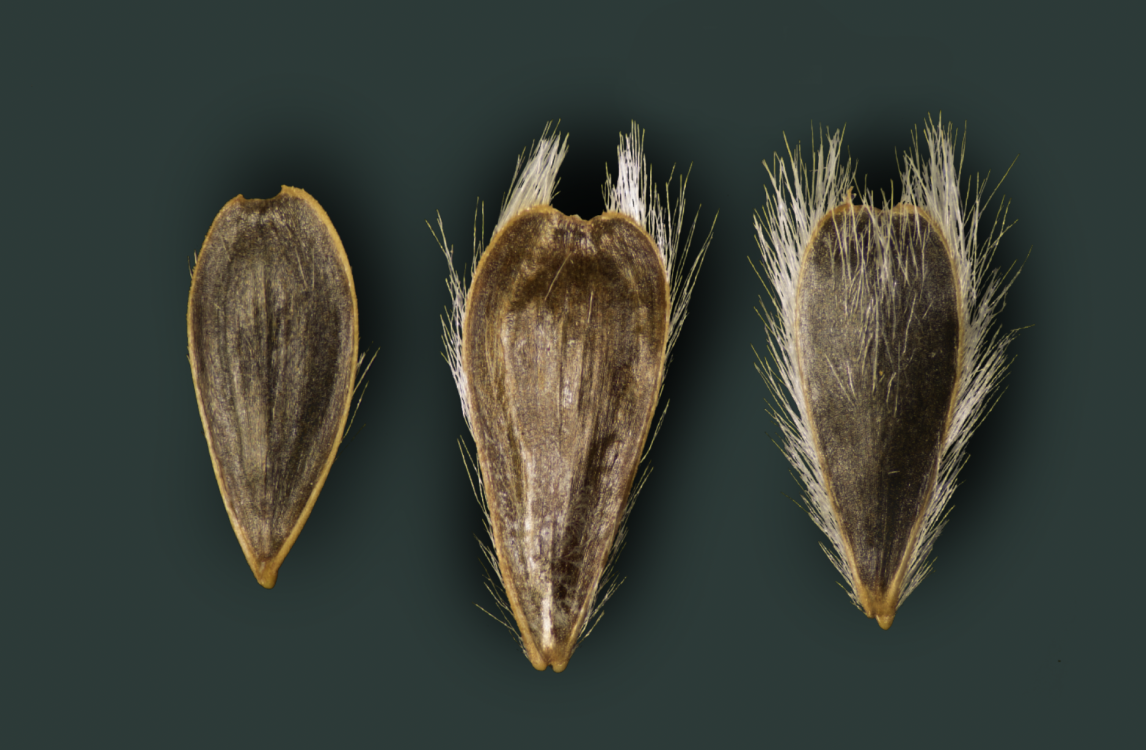
As the common name suggests, seeds are dispersed by clinging to passing animals. The fruits of the showy stickseed are spurred and covered with stout hairs that cling to the hair and bodies of animal. They can even cling to the smooth skin on the palm of one's hand (USFWS 2000).

Threats
  • Fire suppression allowing competition and shading from native trees and shrubs (USFWS 20000).
• Fire suppression allowing plant succession to proceed and stabilize slopes. However, subsequent fire may lead to increased slope instability resulting in rockslides, burying H. venusta (WNHP 1999).
• Trampling and destruction from fire suppression activities (USFWS 2000).
• Invasion by noxious weeds, especially Dalmatian toadflax (Linaria dalmatica) and diffuse knapweed (Centaurea diffusa). These species have the potential to completely dominate and out-compete H. venusta in this area (USFWS 2000).
• Landslides (USFWS 2000).
• Collecting for horticultural purposes (USFWS 2000).
• Highway maintenance activities such as salt or sand application and herbicide spraying. These practices have recently been limited, but are likely causes of past decline. Herbicide application has ceased, but residual effects are possible (USFWS 2000).
• Automobile emissions (unconfirmed but potential) (USFWS 2000) and air pollution - high lead levels may inhibit reproduction (Malmquist 1995).
• Small population size and limited gene pool may decrease reproductive fitness (USFWS 2000).
• Small seed size and low seedling survivorship (USFWS 2000).
• Small population size and limited distribution (only one site) make the species susceptible to extinction due to random natural or human-caused catastrophic events (Wenny and Everett 1995).

Current Research Summary
  • Genetic (isosyme) studies- Preliminary isozyme analysis by US Forest Service measured the differences in plant proteins to detect genetic differences between Hackelia venusta (white flowered form), H. venusta (blue flowered form-later named H. taylori) and other Hackelia species. These results indicated a clear separation between the white and blue flowered forms and suggest that the blue form is the result of a recent speciation event (Harrod et al. 1998).
• Development of micropropagation techniques to aid in reintroduction efforts- Results indicate that if vegetative material is harvested in early spring, Hackelia venusta plantlets can be successfully micropropagated, acclimatized, and reintroduced within one growing season (Wenny 1995).
• Development of micropropagation techniques utilizing low levels of growth regulators- Shoot cultures normally produce true-to-type plantlets, but off-type individuals (due to mutation) can result from use of growth regulators and extended subculture. In an effort to reduce the threat of somaclonal variation, researchers supplemented culture media with minimal cytokinin and auxin. Shoot proliferation is not as vigorous as with optimal levels of growth regulators, but the benefit of reduced variation is great to the conservation field (Edson et al. 1996).
• Continued propagation and tissue culture research at the Rare Plant Care and Conservation Program through the Center for Urban Horticulture at the University of Washington, Seattle. Early results show that it may be easier to grow from seed than originally thought (Laura Zybas, Rare Plant Care and Conservation Program, 2001, Personal Communication).

Current Management Summary
  • The sole remaining population is on National Forest land that is designated at a "Botanical Area". The area was established in 1938 to protect Lewisia tweedyi, a plant then thought to be rare. The plant is more common than thought, but the designation of the land has continued because of the presence of Hackelia venusta and Silene seelyi (USFWS 2000).
• Endangered species and critical habitat designation proposed by US Fish and Wildlife Service in Feb. 2000. Decision coming soon?
• No active management of the site was occurring as of 2000 (USFWS 2000).
• BBG houses seeds from the only remaining population. Seeds were collected in 1984 and 1987 as bulk collections. In 1990 and 1995 collections, seeds from different maternal lines were kept separate (BBG file).

Research Management Needs
  • Inventory potential habitat throughout range.
• Consultation about activities such as highway maintenance, fire suppression, timber harvest, and habitat restoration activities to determine cumulative impact on Hackelia venusta population.
• Investigate the natural history of Hackelia vestusta - What was its historic range? Could the white-flowered population have been at higher elevations at one time? (Malmquist 1995).
• Explore the risk of pests and disease being transmitted from the greenhouse to the reintroduction site. This may not be a large problem in cool climates, but all moss and liverworts should be removed from containers, and plants should be inspected by a pathologist prior to reintroduction (Malmquist 1995).
• Examination of life history: Reproductive/pollination biology, seed production, germination requirements, seedling establishment, life span (Malmquist 1995).

Ex Situ Needs
  • Store genetically representative sample of seeds.
• Determine optimal germination requirements.
• Develop propagation and reintroduction protocols.

References

Books (Single Authors)

Abrams, L.; Ferris, R.S. 1944. Illustrated Flora of the Pacific States: Washington, Oregon, and California. Stanford, CA: Stanford University Press.

Conference Proceedings

Malquist, L. Pre-recovery Conference for Hackelia venusta at Moscow, Idaho. Conference notes. On file at The Berry Botanic Garden. 1995.

Electronic Sources

(2002). Rare Plants in Washington, and Research. The Rare Plant Care and Conservation Program at the University of Washington's Center for Urban Horticulture. http://depts.washington.edu/rarecare/index.htm. Accessed: 2002.

USFWS. (2002). Frequently Asked Questions about showy stickseed (Hackelia venusta). U.S. Fish and Wildlife Service-Pacific Region Offices News. http://pacific.fws.gov/news/2002/10/faq.htm. Accessed: 2002.

WNHP. (2000). Washington Natural Heritage Program Database. Olympia, Washington.

Journal Articles


1929. (Original Publication). Research Studies of the St. College of Wash. 1, 2: 104.

Edson, J.L.; LeegeBrusven, A.D.; Everett, R.L. 1996. Minimizing growth regulators in shoot culture of an endangered plant, Hackelia venusta (Boraginaceae). In Vitro Cellular Developmental Biology-Plant. 32, 4: 267-271.

Harrod, R.J.; Aubry, C.; Hipkins, V.D. 1998. Conservation of Blue-Flowered Showy Stickseed (Hackelia venusta): A TES Species (Project #64) National Forest Genetic Electrophoresis Lab.

Harrod, R.J.; Malmquist, L.A.; Carr, R.L. 1999. A review of the taxonomic status of Hackelia venusta (Boraginaceae). Rhodora. 101, 905: 16-27.

Hipkins, V.D.; Wilson, B.L..; Harrod, R.J.; Aubry, C.. 2003. Isozyme variation in showy stickseed, a Washington endemic plant, and relatives. Northwest Science. 77: 170-177.

USFWS. 1976. Proposed Endangered Status for 1700 U.S. Plants. Federal Register. 41: 24523-24572.

USFWS. 1996. Notice of Reclassification of 96 Candidate Taxa. Federal Register. 61, 40: 7457-7463.

USFWS. 2000. Proposed Endangered Status for the Plant Hackelia venusta (Showy Stickseed). Federal Register. 65, 30: 7339-7346.

USFWS. 2002. Determination of Endangered Status for the Washington Plant Hackelia venusta (Showy Stickseed). Federal Register. 67: 5515-5525.

Newspaper Articles

Burton, Gregory H. 1996 August 18, 1996. Scientist Helps Save Plant: Road work on Highway 2 threatened the rare Hackelia. Moscow-Pullman Daily News-The Wenatchee World; Wenatchee, WA. p. 10.

USFWS. 2001 November 7, 2001. U.S. Fish and Wildlife Service Determines Endangered Species Status for Washington State's Rarest Plant. U.S. Fish & Wildlife Service, Pacific Region News Catalog Press Release;

USFWS. 2002 February 6, 2002. Washington's Rarest Plant Gains Endangered Species Protection. U.S. Fish & Wildlife Service, Pacific Region News Catalog Press Release;

Reports

Edson, J.L. 1996. A Plan to Micropropagate Hackelia venusta. Final Report. USDA Forest Service. p.8. (Unpublished Report). Cooperative Agreement No. PNW 92-0288.

Robson, K.A. 1992. Reproductive constraints and seedling recruitment in the endangered showy stickseed (Hackelia venusta). Portland: USDA-USFS, Pacific Northwest Research Station.

Wenny, D.; Everett, R.L. 1995. Micropropagation to conserve Hackelia venusta. Draft prepared by the Micropropagation Unit, and Department of Forest Resources and College of Forestry at the University of Idaho.

WNHP. 1999. Field Guide to Selected Rare Vascular Plants of Washington. Produced as part of a cooperative project between the Washington Department of Natural Resources, Washington Natural Heritage Program, and the U.S.D.I. Bureau of Land Management, Spokane District.


  This profile was updated on 3/4/2010
California
Oregon
Washington
Idaho
Nevada
Arizona
Utah
Montana
Wyoming
Colorado
New Mexico
North Dakota
South Dakota
Nebraska
Kansas
Oklahoma
Texas
Minnesota
Iowa
Missouri
Arkansas
Louisiana
Wisconsin
Illinois
Michigan
Michigan
Indiana
Ohio
Kentucky
Tennessee
Mississippi
Alabama
Florida
Georgia
South Carolina
North Carolina
Virginia
West Virginia
Pennsylvania
Delaware
Maryland
New Jersey
Connecticut
Rhode Island
Massachusetts
Vermont
New Hampshire
Maine
New York
New York
Hawaii
Hawaii
Hawaii
Hawaii