CPC National Collection Plant Profile
|
Eryngium cuneifolium
Family: |
Apiaceae |
Common Names: |
snakeroot, wedge-leaved button-snakeroot, wedge-leaved button-snakeroots, wedge-leaved eryngo |
Author: |
Small |
Growth Habit: |
Perennial |
CPC
Number: |
1818 |
|
|
|
|
Primary
custodian for this plant in the CPC National Collection of Endangered
Plants is: |
|
Nick Baker contributed to this Plant Profile. |
Eryngium cuneifolium
|
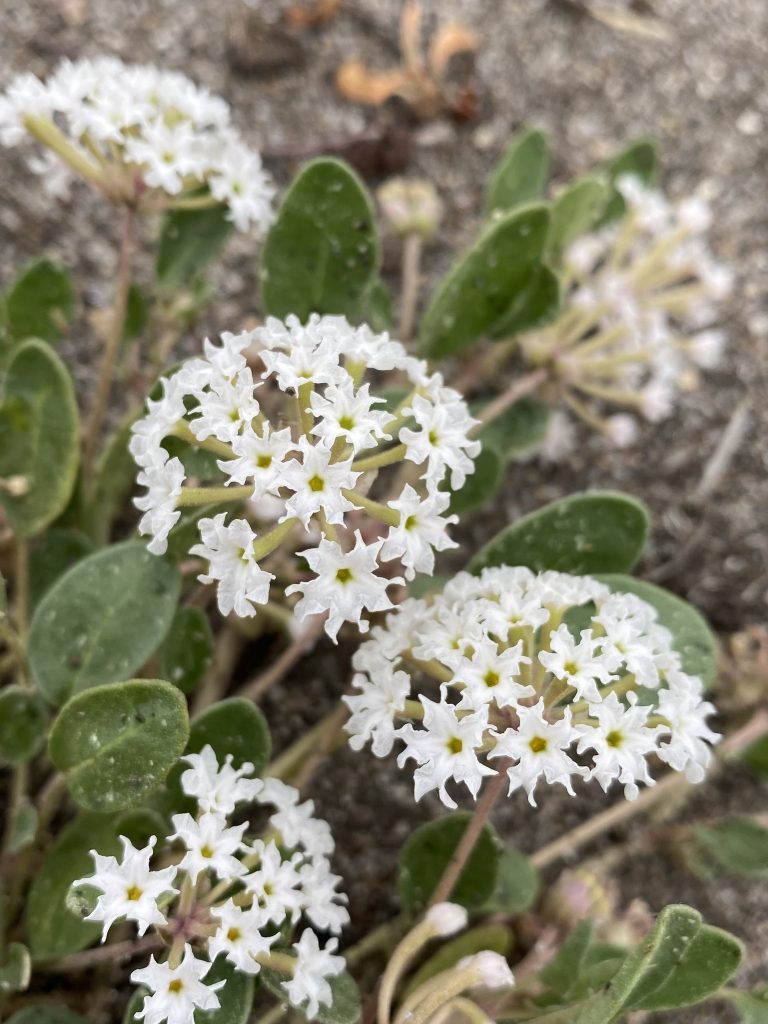
Eryngium cuneifolium is an aromatic perennial herb found on the southern Lake Wales Ridge in Highlands County, Florida. It has a long, woody taproot and a persistent rosette of dark green leaves. These leaves are long, stalked, and shaped like narrow wedges. With several erect and branching flowering stems emerging from the rosette, a plant can reach a maximum height of 0.9 m. Blooming from August to October, flowers are small with white petals, filaments, styles and stigmas and powdery-blue anthers that form small heads with bristly bracts. (USFWS 1999; FNAI 2000)
This species is threatened by the development of its habitat for housing and citrus production, as well as by fire suppression. This species thrives in the open gaps of scrub areas that would otherwise be closed canopies if not for the presence of occasional fire. (USFWS 1999; FNAI 2000)
Distribution
& Occurrence |
|
State Range
Habitat
| |
This species is found in the scrub communities of Florida's xeric uplands. (Coile 2000) It favors sunny sites of open sand or disturbed soil and most often occurs in the shrub gaps of rosemary scrub. (NatureServe 2001) |
Distribution
| |
Found only on the southern Lake Wales Ridge in Highlands County, Florida. (FNAI 2000) |
Number Left
| |
17 sites, 1 site protected at Archbold Biological Station sites in southern Lake Wales Ridge, Highlands counties |
State/Area
Protection
| |
State/Area |
Rank |
Status |
Date |
|
| |
|
|
|
|
|
| |
|
|
|
|
|
| |
|
|
|
|
|
| |
|
|
|
|
|
Conservation,
Ecology & Research |
|
Ecological
Relationships
| |
• This species reproduces sexually, via seed.
• Gravity is the only known seed-dispersal mechanism.
• Pollination is likely done by generalist insects
• Ceratiola ericoides may affect this species through allelopathy
(Wunderlin et al. 1981; Kral 1983; Richardson 1985) |
Threats
| |
Habitat threatened by development for housing and citrus production. Also threatened within its habitat by canopy closure due to fire suppression. (NatureServe 2001) |
Current Research Summary
| |
Some research on management and life history has been conducted by Eric Menges with the Archbold Biological Station.
|
Current Management Summary
| |
There are some sites on protected land that are being monitored by the Archbold Biological Station. (USFWS 1996) However, no active management programs designed for this species are being implemented. (NatureServe 2001) |
Research Management Needs
| |
• Specific effects of disturbance on colonization and survival needs research
• Small number of populations on protected land, need to acquire additional sites for preservation
• Controlled burning or some other mechanical disturbance needed to maintain open space for habitat |
Ex Situ Needs
|
Books (Single Authors)
|
|
Coile, N.C. 2000. Notes on Florida's Regulated Plant Index (Rule 5B-40), Botany Contribution 38. Gainesville, Florida: Florida Dept. of Agriculture and Consumer Services, Division of Plant Industry.
|
|
FNAI. 2000. Field Guide to the Rare Plants and Animals of Florida online. Florida Natural Areas Inventory.
|
|
Hall, David W. 1993. Illustrated plants of Florida and the coastal plain. Gainesville, FL: Maupin House. 431p.
|
|
Small, J.K. 1933. Manual of the southeastern flora. New York, NY: Hafner Publishing Company. 1505p.
|
|
Wunderlin, R.P. 1998. Guide to the vascular plants of Florida. Gainesville, Florida: University Press of Florida. 806p.
|
|
Books (Sections)
|
|
Hawkes, C.V. 2000. Interactions of soild crusts with four endangered herbs in xeric Florida shrub. In: Gordon, D.R.; Slapcinsky, J.L., editors. Annual Research Report: A Compilation of Research Conducted or Supported by The Nature Conservancy in Florida. Florida Science and Stewardship Programs and The Nature Conservancy.
|
|
Kartesz, J.T. 1999. A synonymized checklist of the vascular flora of the U.S., Canada, and Greenland. In: Kartesz, J.T.; Meacham, C.A., editors. Synthesis of the North American Flora, Version 1.0. North Carolina Botanical Garden. Chapel Hill, NC.
|
|
Conference Proceedings
|
|
Quintana-Ascencio, P.F.; Menges, E.S. Poster: Evaluating population viability in Eryngium cuneifolium: Deciphering a decade of demographic data. 15th Annual Meeting; Hilo, Hawaii. 2001. Society for Conservation Biology.
|
|
Electronic Sources
|
|
(2002). Atlas of Florida Vascular Plants. [Web site] University of South Florida Institute for Systematic Botany. http://www.plantatlas.usf.edu/isb/default.htm. Accessed: 2008.
|
|
NatureServe. (2008). NatureServe Explorer: An online encyclopedia of life [web application]. [Internet].Version 7.0. NatureServe, Arlington, Virginia. http://www.natureserve.org/explorer. Accessed: (June 17, 2008).
|
|
USGS. (2002). Status of Listed Species and Recovery Plan Development. [Web site] USGS: Norther Prairie Wildlife Research Center. http://www.npwrc.usgs.gov/resource/distr/others/recoprog/plant.htm. Accessed: 2002.
|
|
Journal Articles
|
|
Abrahamson, W.G. 1984. Post-fire Recovery of Florida Lake Wales Ridge Vegetation. American Journal of Botany. 71, 1: 9-21.
|
|
Abrahamson, W.G. 1984. Species response to fire on the Florida Lake Wales Ridge. American Journal of Botany. 71, 1: 35-43.
|
|
Abrahamson, W.G.; Johnson, A.F.; Layne, J.N.; Peroni, P.A. 1984. Vegetation of the Archbold Biological Station: an example of the southern Lake Wales Ridge. Florida Scientist. 47: 209-250.
|
|
Bell, O.R. 1963. The genus Eryngium in the southeastern states. Castanea. 28: 73-79.
|
|
Christman, S.P.; Judd, W.S. 1990. Notes on plants endemic to Florida scrub. Florida Scientist. 53, 1: 52-73.
|
|
Dolan, R.W.; Yahr, R.; Menges, E.S. 1999. Conservation implications of genetic variation in three rare species endemic to Florida rosemary scrub. American Journal of Botany. 86, 11: 1556-1562.
|
|
Evans, M.E.K.; Menges, E.S.; Gordon, D.R. 2003. Reproductive biology of three sympatric endangered plants endemic to Florida scrub. Biological Conservation. 111: 235-246.
|
|
Hunter, M.E.; Menges, E.S. 2002. Allelopathic Effects and Root Distribution of Ceratiola ericoidesi (Empetraceae) on Seven Rosemary Scrub Species. American Journal of Botany. 89, 7: 1113-1118.
|
|
Johnson, A.F. 1982. Some demographic characteristics of the Florida rosemary, Ceratiola ericoides. American Midland Naturalist. 108, 1: 170-174.
|
|
Martin, T. 2000. Florida's Desert: Saving a vanishing treasure. Plant Talk. 21: 26-29.
|
|
McDonald, D.B.; Hamrick, J.L. 1996. Genetic variation in some plants of Florida scrub. American Journal of Botany. 83, 1: 21-27.
|
|
Menges, E.S.; Kimmich, J. 1996. Microhabitat and time-since-fire: Effects on demography of Eryngium cuneifolium (Apiaceae), a Florida scrub endemic plant. American Journal of Botany. 83, 2: 185-191.
|
|
Navarrete, A.; Nino, D.; Reyes, B.; Sixtos, C.; Aguirre, E.; Estrada, E. 1990. On the hypocholesteremic effect of Eryngium heterophyllum. Fitoterapia. 61, 2: 183-184.
|
|
Quintana-Ascencio, P.F.; Menges, E.S. 1996. Inferring metapopulation dynamics from patch-level incidence of Florida scrub plants. Conservation Biology. 10: 1210-1219.
|
|
Quintana-Ascencio, P.F.; Menges, Eric S. 2000. Competitive abilities of three narrowly endemic plant species in experimental neighborhoods along a fire gradient. American Journal of Botany. 87, 5: 690-699.
|
|
USFWS. 1986. 18 Plants Proposed for Listing Protection. Endangered Species Technical Bulletin. 11, 5: 1-13.
|
|
USFWS. 2001. A newsletter dedicated to sharing information about the Florida scrub ecosystem. U.S. Fish & Wildlife Service: Saving Our Scrub. 2, 3: 8.
|
|
Villa-Lobos, J. 1999. South Florida Multi-Species Recovery Plan. Plant Talk, Plant Conservation Worldwide. No. 18: 15.
|
|
Reports
|
|
Christman, S.P. 1988. Endemism and Florida's interior sand pine scrub. Tallahassee, Florida: Florida Game and Fresh Water Fish Commission. p.247 + maps, tables & appendices. Final project report on project #GFC-84-101.
|
|
Johnson, A.F. 1981. Scrub endemics of the Central Ridge, Florida. U.S. Fish & Wildlife Service. Unpublished report.
|
|
Kral, R. 1983. A report on some rare, threatened or endangered forest related vascular plants of the south. Atlanta, GA: U.S. Forest Service. p.718. USFS technical publication R8-TP2, . Vol. 1.
|
|
Kral, R. 1983. A report on some rare, threatened, or endangered forest-related vascular plants of the South. Athens, GA: U.S. Dept. of Agriculture Forest Service. p.1305. U.S. Dept. of Agriculture Forest Service Technical.
|
|
MacAllister, B.A.; Harper, M.G. 1998. Management of Florida Scrub for Threatened and Endangered Species. US Army Corps of Engineers, Construction Engineering Research Laboratories. p.95. USACERL Technical Report 99/19.
|
|
Martin, D.; Hardin, E.D. 1991. Florida Scrub Plants. U.S. Fish & Wildlife Service, Florida Division of Forestry.
|
|
Menges, E.S. 1995. Report on Experimental Research and Monitoring of Four Species of Endangered Plants on the Lake Wales Ridge, Florida. Tallahassee, Florida: Florida Division of Forestry: Statewide Endangered and Threatened Plant Conservation Program.
|
|
Menges, E.S.; Weekley, Carl W. 1999. Final Report on Continued Ecological Monitoring and Experimental Research on Four Florida Scrub Endemic Plants. Tallahassee, Florida: Florida Division of Forestry: Statewide Endangered and Threatened Plant Conservation Program.
|
|
Menges, E.S.; Yahr, R. 1996. Continued Ecological Monitoring and Research on Four Florida Scrub Plants. Tallahassee, Florida: Florida Division of Forestry: Statewide Endangered and Threatened Plant Conservation Program.
|
|
Menges, E.S.; Yahr, R. 1998. Final Report on Continued Ecological Monitoring and Experimental Research on Four Florida Scrub Endemic Plants. Tallahassee, Florida: Florida Division of Forestry: Statewide Endangered and Threatened Plant Conservation Program.
|
|
Quintana-Ascencio, Pedro F.; Menges, Eric S. 1997. Survivorship, Growth and Fecundity of Three Narrowly Endemic Plants in Competitive Neighborhoods Along a Fire Disturbance Gradient. Tallahassee, Florida: Florida Division of Forestry: Statewide Endangered and Threatened Plant Conservation Program.
|
|
Richardson, D. 1985. Evidence for allelopathy in sand pine scrub. Oral presentation to: Florida Native Plant Society, May 3, 1985. Based on: unpublished thesis, University of South Florida. Tampa, Florida:
|
|
USFWS. 1989. Recovery plan for eleven Florida scrub plants. Atlanta, Georgia: U.S. Fish and Wildlife Service. p.64.
|
|
USFWS. 1996. Recovery Plan for Nineteen Central Florida Scrub and High Pineland Plants (revised). Atlanta, GA: U.S. Fish and Wildlife Service. p.134.
|
|
USFWS. 1999. South Florida Multi-species Recovery Plan. Atlanta, GA: U.S. Fish and Wildlife Service, Southeast Region.
|
|
Vletter, F. 1990. Eryngium planum plant named Calypso. Washington, D.C.: Plant Patent: U.S. Patent and Trademark Office. p.(7152) 2 p. plates.
|
|
Wunderlin, R.P.; Richardson, D. 1981. Status report on Eryngium cuneifolium. Atlanta, Georgia: U.S. Fish and Wildlife Service, Endangered Species Office, Region 4.
|
|
|
|
This
profile was updated on 3/4/2010 |
|