CPC National Collection Plant Profile
|
Dodecahema leptoceras
Family: |
Polygonaceae |
Common Name: |
slender-horned spineflower |
Author: |
(Gray ex Benth.) Reveal & Hardham |
Growth Habit: |
Annual |
CPC
Number: |
12921 |
|
|
|
|
Primary
custodian for this plant in the CPC National Collection of Endangered
Plants is: |
|
Valerie Soza contributed to this Plant Profile. |
Dodecahema leptoceras
|
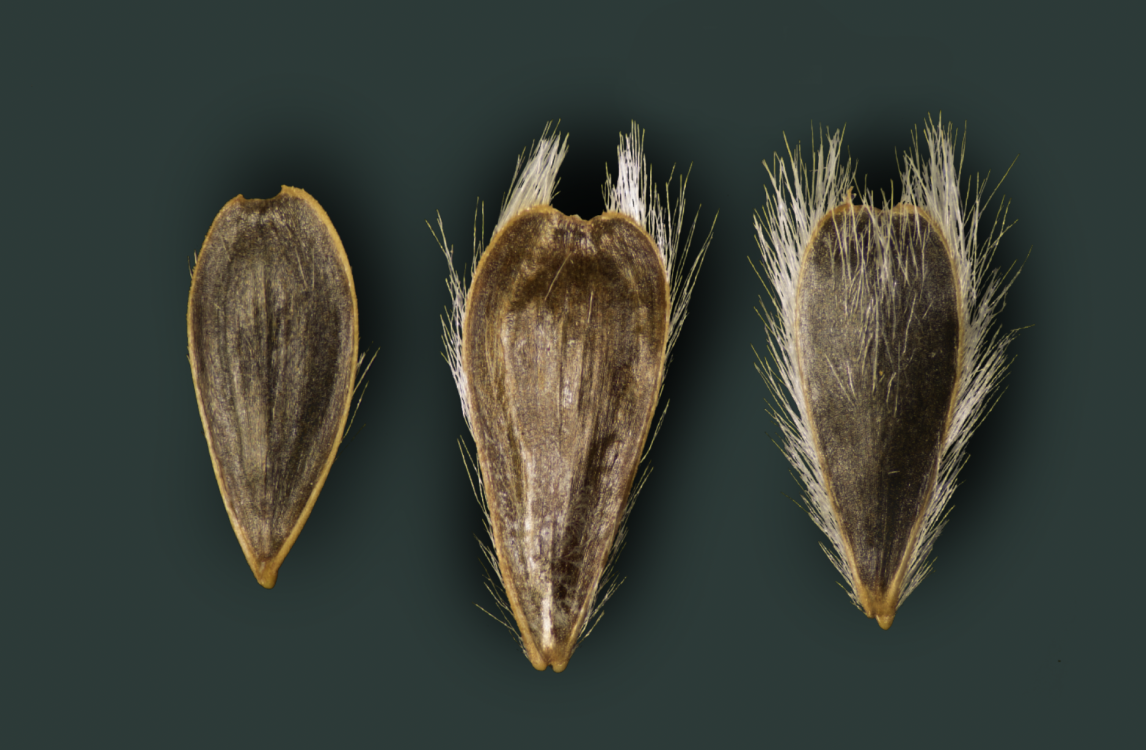
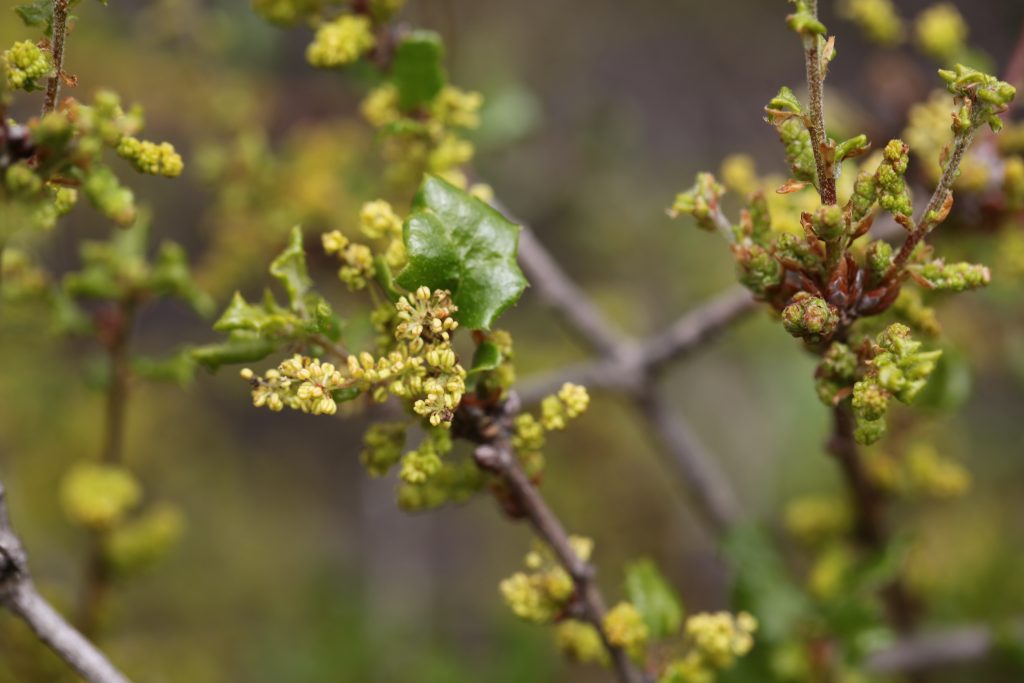
Slender-horned spineflower is a federally-endangered, small, spreading annual in the buckwheat family (Polygonaceae), with stems reaching 3-15 cm across. The size of spineflowers varies, however, depending on annual available moisture (Ferguson et al. 1996). This annual has a basal rosette of leaves, from which rise dense flowering stalks. Slender-horned spineflower is distinguished from other spineflowers by the presence of 6 terminal awns and 6 hooked basal awns on each involucre. The involucre in this species is a group of bracts that have been fused together to enclose approximately 3 white to pink flowers within each involucre, blooming April through June (Hickman 1993; Munz 1974).
Distribution
& Occurrence |
|
State Range
Habitat
| |
Slender-horned spineflower is known from alluvial fans, floodplains, stream terraces, washes and associated benches, from 700-2500 feet (210-760 m) in elevation. It grows in riverbed alluvium high in silt and low in nutrients and organic matter; in silt-filled, shallow depressions on relatively flat surfaces surrounded by scattered, river-rounded, cobble-sized rocks (Allen 1996; Wood and Wells 1996). These sediments are on stable surfaces, usually older than 100 years (Wood and Wells 1996). The slender-horned spineflower is generally found in open areas among alluvial fan scrub, often associated with other spineflower species, and in low density of exotic grasses and other introduced weedy species. |
Distribution
| |
This species is distributed in drainage systems of adjacent foothills to the Transverse and Peninsular Ranges of southern California from Los Angeles, Riverside, and San Bernardino counties (Young et al. 2000). Historically, this species ranged from the southern base of the Liebre Mountains, Western Transverse Ranges, and the western edge of the San Gabriel Mountains (Los Angeles County) to the eastern edge of the range at Cajon Canyon (San Bernardino County); then southeast from the Santa Ana River wash near Redlands (San Bernardino County), southeast to the San Jacinto Mountains; and also in Riverside County, in Temescal Canyon and southeast to Vail Lake/Dripping Springs area (CNDDB 2000). |
Number Left
| |
There have been 37 reported occurrences of slender-horned spineflower in southern California, 23 are existing occurrences and 14 have been or are presumed extirpated. These occurrences are located in 8 general areas: Bee Canyon, Big Tujunga Wash, Lytle Creek/Cajon Canyon, Santa Ana River wash, Bautista Creek, San Jacinto River, Temescal Canyon, and Vail Lake/Dripping Springs area (CNDDB 2000). |
State/Area
Protection
| |
State/Area |
Rank |
Status |
Date |
|
| |
|
|
|
|
|
Conservation,
Ecology & Research |
|
Ecological
Relationships
| |
• Slender-horned spineflower germinates late February to early March in response to winter rains. Abundant germination is known to occur following successive years of little or no seed production, suggesting that seeds remain viable in the soil for a number of years (Ferguson and Ellstrand 1999).
• With respect to the reproductive biology of slender-horned spineflower, it has been demonstrated that this species has a higher level of genetic diversity, mostly within populations, than is typical for annual or endemic plant species. In addition, this large amount of genetic variation is typical of species with a predominantly outcrossed mating system. During studies, mostly ants and flying insects were observed visiting flowers of slender-horned spineflower (Ferguson et al. 1996) |
Threats
| |
• Many historical occurrences of this species have been lost to urbanization and stream channelization.
• Current threats include development, sand and gravel mining, flood control, hydrological alteration, proposed reservoir construction, off-road vehicles, herbivory, and invasion of exotic species (CNDDB 2000; Tibor 2001). |
Current Research Summary
| |
A number of studies on slender-horned spineflower have been conducted with funding provided by U.S. Fish and Wildlife Service Section 6 money:
• An assessment of seed bank buffering of genetic change in slender-horned spineflower at 4 locations was conducted by Ferguson and Ellstrand, University of California Riverside (1999).
• Mycorrhizal associations within slender-horned spineflower habitat were studied in 8 locations. Typically, annuals within the buckwheat family do not form mycorrhizae. However, slender-horned spineflower was found to form associations, although not likely mutualistic, with arbuscular-mycorrhizal fungi. These associations were determined not to be a limiting factor in suitable but unoccupied habitat (Young et al. 2000)
• Various analyses have been conducted to characterize the habitat of slender-horned spineflower, from an ecological and geomorphic analysis. An attempt was made to characterize soils, vegetation cover, associated species, and ages of alluvial sediments that support populations of slender-horned spineflower (Allen 1996;
Wood and Wells 1996).
• In addition, an investigation was made into the population biology of the slender-horned spineflower at 4 sites to determine population demographics, breeding systems, and genetic variation (Ferguson et al. 1996). |
Current Management Summary
| |
Most of the known occurrences of slender-horned spineflower are located on private property threatened by development, only several occurrences are located on federal lands (national forest system lands) and managed as sensitive. |
Research Management Needs
| |
Management recommendations for slender-horned spineflower have prescribed the preservation of older, stable alluvial and/or stream surfaces in washes for protection of this plant species (Wood and Wells 1996) and for the potential establishment of new populations. |
Ex Situ Needs
| |
Previous efforts at growing slender-horned spineflower from germinated seeds have failed. More research is needed in establishing successful germination protocols and growing conditions for slender-horned spineflower if future management plans are to include the establishment of new sites (Ferguson et al. 1996). |
|
Books (Single Authors)
|
|
Munz, P.A. 1974. A flora of southern California. Berkeley: Univ. California Press. 1086p.
|
|
Books (Sections)
|
|
Kartesz, J.T. 1999. A synonymized checklist of the vascular flora of the U.S., Canada, and Greenland. In: Kartesz, J.T.; Meacham, C.A., editors. Synthesis of the North American Flora, Version 1.0. North Carolina Botanical Garden. Chapel Hill, NC.
|
|
Books (Edited Volumes)
|
|
David P. Tibor, Convening Editor. 2001 Inventory of Rare and Endangered Plants of California (sixth edition). Sacramento, CA: California Native Plant Society. 388p.
|
|
James C. Hickman, Editor. 1993 The Jepson manual: Higher plants of California. Berkeley: University of California Press. 1400p.
|
|
Electronic Sources
|
|
CDFG. (2002). California's Plants and Animals, Threatened and Endangered Plants. List and Species Accounts. California Department of Fish and Game, Habitat Conservation Planning Branch. http://www.dfg.ca.gov/hcpb/species/t_e_spp/teplant/teplanta.shtml. Accessed: 2002.
|
|
CNDDB. (2000). Calfornia Natural Diversity Data Base (CNDDB). Version 2.1.2. California Natural Diversity Database. Accessed: California Department of Fish and Game, Sacramento.
|
|
Journal Articles
|
|
USFWS. 1986. Proposed Endangered Status for Eriastrum densifolium ssp. sanctorum (Santa Ana River Woolly-star) & Centrostegia leptoceras (Slender-Horned Spineflower). Federal Register. 51, 68: 12160-12184.
|
|
USFWS. 1987. Determination of Endangered Status for Eriastrum densifolium ssp. sanctorum (Santa Ana River Woolly-star) & Centrostegia leptoceras (Slender-Horned Spineflower). Federal Register. 52: 3626?-36270.
|
|
Reports
|
|
Allen, Edith B. 1996. Characterizing the habitat of slender-horned spineflower (Dodecahema leptoceras), ecological analysis. Long Beach: Prepared for California Department of Fish and Game, Region 5.
|
|
Dudek & Associates, Inc. 1999. Western Riverside County Multiple Species Habitat Conservation Plan (MSHCP) (Riverside County Integrated Plan (RCIP)) ôDraft Proposalö. Riverside, CA: County of Riverside Transportation and Land Management Agency. p.165. Draft Proposal.
|
|
Ferguson, N.J.; Ellstrand, N.C. 1999. Assessment of seed bank buffering of genetic change in Dodecahema leptoceras (slender-horned spineflower). Prepared for Mary Meyer, Plant Ecologist, California Department of Fish and Game, Region 5.
|
|
Ferguson, N.J.; Whitkus, R.; Ellstrand, N.C. 1996. Investigation into the population biology of Dodecahema leptoceras (slender-horned spineflower). Long Beach: Prepared for Mary Meyer, Plant Ecologist, California Department of Fish and Game, Region 5.
|
|
KEA Environmental, Inc. 2001. Biological Resources Technical Report for the Valley Rainbow Interconnect. San Diego, CA: San Diego Gas & Electric Company.
|
|
Stephenson, John R.; Calcarone, Gena M. 1999. Southern California Mountains and Foothills Assessment: Habitat and Species Conservation Issues. Chapter 5 - Potentially Vulnerable Species: Plants. Albany, CA: Pacific Southwest Research Station, Forest Service, U.S. Department of Agriculture. p.402. General Technical report PSW-GTR-172.
|
|
Wood, Yvonne; Wells, Stephen G. 1996. Final Report: Characterizing the habitat of slender-horned spineflower (Dodecahema leptoceras), geomorphic analysis. Long Beach: Prepared for Mary Meyer, Plant Ecologist, California Department of Fish and Game, Region 5.
|
|
Young, Jennifer C.; Zink, Thomas; Allen, M. 2000. Slender-horned spineflower (Dodecahema leptoceras) microhabitat characterization of mycorrhizal associations. San Diego: Prepared for California Department of Fish and Game, Region 5.
|
|
Theses
|
|
Ferguson, Nancy Jean. 1999. Demographic and genetic variation in Dodecahema leptoceras (Gray) Rev. and Hardham (Endangered species). [Ph.D. Thesis]: University of California. Riverside. 112p.
|
|
|
|
This
profile was updated on 3/4/2010 |
|