|
Conserving and restoring
America's native plants |
|
CPC National Collection Plant Profile
|

|
|
Purshia subintegra
| Family: |
Rosaceae (Rose Family) |
| Common Names: |
Arizona cliffrose, Arizona cliff-rose |
| Taxon Synonym: |
Cowania subintegra |
| Author: |
Kearney |
| Growth
Habit: |
Shrub |
| CPC
Number: |
1097 |
|
|
enlarge
| Photographer:
Joyce Maschinski |
|
|
| |
| Primary
custodian for this plant in the CPC National Collection of Endangered
Plants is: |
| |
| Joyce Maschinski, Ph.D. contributed to this Plant Profile. |
Purshia subintegra
|
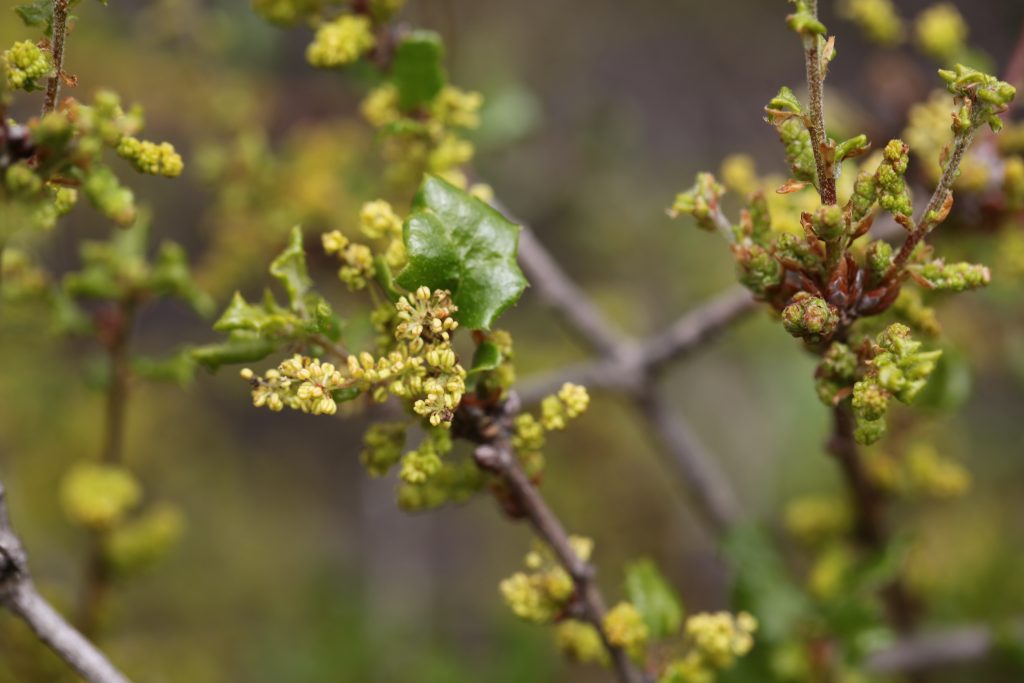
Arizona cliffrose, Purshia subintegra (Kearney) Henrickson is a xeric rosaceaeous evergreen shrub with pale yellow flowers and entire leaves that lack glands. Usually less than 2 m tall, it is closely related to Purshia stansburiana, a widespread species that has lobed leaves with glands and stalked glands on the hypanthium. Known from four disjunct populations in central Arizona, P. subintegra usually occurs on lacustrine outcrops, which have a distinct chalky white appearance. The largest population occurs in the Verde Valley, where a Pliocene limestone deposit called the Verde Formation forms finger-like protrusions into the basin (Phillips et al. 1996).
| Distribution
& Occurrence |
|
State Range
Habitat
| |
Plants seem to be restricted to a single layer of chalky white lake deposit limestone, which form the top layer of finger-like mesas. (USFWS 1995) |
Distribution
| |
It is known from 4 disjunct populations across central Arizona in the upper Sonoran desert on Tertiary lakebed limestone deposits: Burro Creek in Mohave County (Kearney 1943), Bylas, Graham County (Pinkava et al. 1970), near Horseshoe Lake, Maricopa and Yapavai County and in the Verde Valley near Cottonwood, Yapavai County (Anderson 1986). The largest, healthiest, and most morphologically variable population grows in the Verde Valley outside of Cottonwood, Arizona. |
Number Left
| |
This species is found in four localities in central Arizona below the Mogollon Rim. The most northern of these four locations contains the healthiest individuals, but these are threatened by road construction. |
State/Area
Protection
| |
State/Area |
Rank |
Status |
Date |
|
| |
Arizona |
S1 |
|
8/1/2002 |
|
| Conservation,
Ecology & Research |
|
Ecological
Relationships
| |
The largest population of Arizona cliffrose grows in the Verde Valley of Arizona, where it comes into contact with common cliffrose and forms introgressed forms. Hybridization is an issue for this species.
The species germinates after a period of cold stratification and seeds have a fairly high viability. However, the species is difficult to maintain in cultivation. It has extremely large and deep taproots in the wild.
The drought of 2001 and 2002 in this species habitat is a huge threat to its continued survival. A population viability analysis has shown that the species is undergoing a slow but steady decline in both in natural and reintroduced populations.
(Maschinski 2000; USFWS 1995) |
Threats
| |
Threats include:
• urbanization
• mining
• overuse by cattle and burros
• road construction
• off-road vehicle traffic
• extended drought
(USFWS 1995) |
Current Research Summary
| |
Our ongoing studies of Arizona cliffrose, Purshia subintegra, have concentrated on many aspects of understanding the biology of the species. Arizona cliffrose is known from 4 disjunct populations in central Arizona. The largest and healthiest population is found on state land in the Verde Valley, where new road construction will bisect the population, destroy approximately 10% of the plants in the population, and destroy available and potential habitat. This plant has extremely deep tap roots, making direct transplantation of threatened individuals to a new location away from the road construction is not possible. Therefore, in order to preserve these plants (with their potentially unique genes) it is necessary to cultivate them either from seeds or cuttings. Until a few yeas ago, this was not possible, as a drought kept the threatened individuals from producing seed, and cultivation from cuttings was considered difficult if not impossible to accomplish.
From 1996-2000, the Arboretum at Flagstaff undertook a mitigation project that entailed learning how to cultivate Arizona cliffrose from cuttings of 65 plants that were threatened by the construction of one road. After a year of work, protocols were finally established for the successful cultivation of this species from cuttings. While not fast, (can take from 6 months to 1 year) this knowledge was key to saving the individuals in the population that were slated to be destroyed by the planned road.
The next step of the process was determining the methods to successfully reintroduce this desert plant into its native habitat. To do this, The Arboretum at Flagstaff conducted 4 experimental reintroduction trials, and found that growing the cuttings in native soil, transplanting them to the reintroduction in February, and watering them for over 5 months resulted in the greatest survival. As of 2002, the results were somewhat promising, as some of the individuals in the reintroduced population were able to survive a second year of drought--the worst in recorded history in the area. (Maschinski 2000) |
Current Management Summary
| |
A management plan is being developed for the USFS lands holding Purshia subintegra in the Verde Valley. There is a good chance that more Purshia habitat will be protected. |
Research Management Needs
| |
Research needs include continued genetic and demographic studies. |
Ex Situ Needs
| |
Continue to collect the genotypes of individuals that will be destroyed from road work and use knowledge of cultivation protocols to eventually reintroduce these individuals to the newly protected habitat on federal land. |
|
| Books (Single Authors)
|
| |
| Rutman, S. 1992. Handbook of Arizona's endangered, threatened, and candidate plants. Phoenix, Arizona: U.S. Fish & Wildlife Service. |
| |
| Books (Sections)
|
| |
| Kartesz, J.T. 1999. A synonymized checklist of the vascular flora of the U.S., Canada, and Greenland. In: Kartesz, J.T.; Meacham, C.A., editors. Synthesis of the North American Flora, Version 1.0. North Carolina Botanical Garden. Chapel Hill, NC. |
| |
| Tepedino, V.J. 2002. Section III. Environmental Monitoring. III.5 The Reproductive Biology of Rare Rangeland Plants and Their Vulnerability to Insecticides. Grasshoppers: Their biology, identification and management, User Handbook. |
| |
| Conference Proceedings
|
| |
| Anderson, J. A Synthetic Analysis of a Rare Arizona Species, Purshia subintegra (Rosaceae). Proceedings of the Southwestern Rare and Endangered Plant Conference; 30 March - 2 April; Santa Fe, NM. In: Sivinski, R.; Lightfoot, K., editors. 1992. New Mexico Forestry and Resources Conservation Division. p 205-220. |
| |
| Baggs, J.E.; Maschinski, J. Detecting morphological and growth rate differences of a confusing Purshia complex using a common garden study. Ecological Section. Botany 2001 "Plants and People"; August 12 - 16, 2001; Albuquerque Convention Center: Albuquerque, New Mexico. 2001. |
| |
| Baggs, J.E.; Maschinski, J. The threat of Increasing Hybridization of an Endangered Plant Species, Purshia subintegra, in the Verde Valley, Arizona. Southwestern rare and endangered plants: proceedings of the third conference; September 25-28; Flagstaff, AZ. In: Maschinski, Joyce; Holter, Louella, editors. 2000. U.S. Department of Agriculture, Forest Service, Rocky Mountain Research Station. Fort Collins, CO (Proceedings RMRS-P-23). p 213-220. |
| |
| Baggs, J.E.; Maschinski, J.. From the Greenhouse to the Field: Cultivation Requirements of Arizona Cliffrose. Southwestern rare and endangered plants: proceedings of the third conference; September 25-28; Flagstaff, AZ. In: Maschinski, Joyce; Holter, Louella, editors. 2000. U.S. Department of Agriculture, Forest Service, Rocky Mountain Research Station. Fort Collins, CO (Proceedings RMRS-P-23). p 176-185. |
| |
| Fitts, R.D.; Tepedino, V.J.; Griswold, T.L. The Pollination Biology of Arizona Cliffrose (Purshia subintegra), Including a Report on Experimental Hybridization With Its Sympatric Cogener P. stansburiana (Rosaceae). Proceedings of the Southwestern Rare and Endangered Plant Conference; 30 March - 2 April; Santa Fe, NM. In: Sivinski, R.; Lightfoot, K., editors. 1992. New Mexico Forestry and Resources Conservation Division. p 359-368. |
| |
| Phillips, B.; Lutz, D.; Popowski, R.; Shaw, H. The Verde Valley Sonoran Desertscrub: An Ecosystem at Risk. Gen. Tech. Rep. RM-GTR-283. Proceedings of the Southwestern Rare and Endangered Plant Conference; September 11-14; Flagstaff, AZ. In: Maschinski, J.; Hammond, H.D.; Holter, L., editors. 1996. USDA and US Forest Service. p 231-236. |
| |
| Electronic Sources
|
| |
| Arizona Game and Fish Department. (1999). Plant Abstracts. Compiled and edited by the Heritage Data Management System, Arizona Game and Fish Department, Phoenix, AZ. http://www.gf.state.az.us/frames/fishwild/hdms_site/Abstracts/Plants/abstracts%20-%20plants.htm. Accessed: 2002. |
| |
| Journal Articles
|
| |
| Fonseca, J. 1992. Southwestern Rare and Endangered Plant Conference. The Plant Press. 16: 6-7. |
| |
| Maschinski, J. 2000. Conservation Efforts for Purshia subintegra, Arizona Cliffrose. The Plant Press (The Arizona Native Plant Society). 24, 2: 2-3. |
| |
| Nabhan, G. 1989. Rescuing Arizona's Endangered Plants. Arizona Highways. 65: 35-41. |
| |
| Perru, C.B.; Bess, V.H.; Stutz, J.C. 1991. Ultrastructure of actinorhizal nodules of Cowania-subintegra rosaceae. Botanical Gazette. 152, 1: 8-12. |
| |
| Reichenbacher, F.W. 1994. Identification of Purshia subintegra (Rosaceae). Great Basin Naturalist. 54, 3: 256-271. |
| |
| Schaack, C. 1987. Lectotypification of Cowania subintegra Kearney, basionym of Purshia subintegra (Kearney) Henrickson (Rosaceae). Taxon. 36: 452-454. |
| |
| Scott, C.M. 1998. Saving the Arizona cliffrose. American Gardener. 77, 6: 18-19. |
| |
| Magazine Articles
|
| |
| Maschinski, J. 1997. An Update on Research. The Arboretum at Flagstaff: 14. 1. 1-6. |
| |
| Reports
|
| |
| 2002. General Species Information. Phoenix, Arizona: Arizona Ecological Services Field Office. |
| |
| USFWS. 1995. Arizona Cliffrose (Purshia subintegra) Recovery Plan. Phoenix, Arizona: U.S. Fish & Wildlife Service, Arizona Ecological Services State Office. p.90 + appendix. |
| |
|