CPC National Collection Plant Profile
|
Euphorbia purpurea
Family: |
Euphorbiaceae |
Common Names: |
Darlington's spurge, glade spurge, purple spurge |
Author: |
(Raf.) Fern. |
Growth Habit: |
Forb/herb |
CPC
Number: |
1910 |
|
|
|
|
Primary
custodian for this plant in the CPC National Collection of Endangered
Plants is: |
|
Elizabeth J. Farnsworth contributed to this Plant Profile. |
Euphorbia purpurea
|
This handsome, stout perennial is found in rich stream valleys of the Appalachian belt of the eastern United States from Delaware to Ohio and West Virginia. This species is rare throughout its range, and wetland alteration, grazing by deer and livestock, and trampling by recreational activity pose continual threats to it's long-term survival.
Research and Management Summary:
A number of individuals and institutions have studied this species, but very little information is available on management activities in areas where it occurs.
Plant Description:
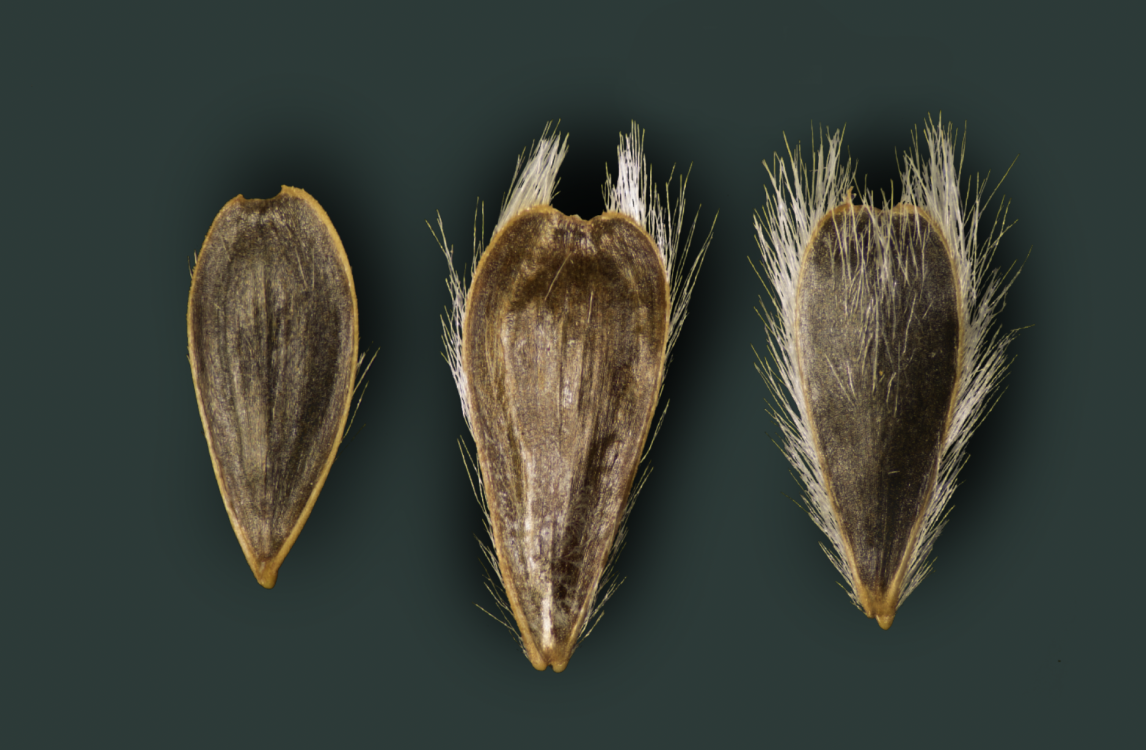
Growing to 1 meter (3 feet) in height, Euphorbia purpurea is named for the purplish, glandular bracts (leaves that enclose inflorescences) that are characteristic of members of its plant family. It is a perennial that forms from a thick rhizome. Its lightly fuzzy leaves are 1 to 3 cm long and occur opposite each other along the stem. Its fruits are small (6 to 8 mm long) and covered with irregular bumps.
Distribution
& Occurrence |
|
State Range
| |
Delaware
Maryland
New Jersey
North Carolina
Ohio
Pennsylvania
Virginia
West Virginia |
|
|
Habitat
| |
Euphorbia purpurea tends to occur in rich, cool woods along seeps, swamps or streamside, often influenced by circumneutral bedrock such as limestone or Ordovician sandstone (Fortney 1975). The species is primarily known from the interior highlands of Maryland, North Carolina, Ohio, Pennsylvania, and the Virginias, although a few populations persist in Delaware and New Jersey (Ogle 1989, NatureServe 2001). There, the growing season is short and precipitation amounts are high relative to the lower elevation regions (Fortney 1975).
Other plant species observed in these areas include disjunct northern taxa like balsam fir (Abies balsamifera), glaucus willow (Salix sp.), Alder-leaved buckthorn (Rhamnus alnifolia), Nannyberry (Viburnum lentago), purple avens (Geum rivale) and highbush cranberry (Viburnum trilobum), trembling aspen, fire cherry, red raspberry, and swamp Saxifrage (Fortney 1975, 1993). Other associated species described from the single Ohio occurrence include bulblet fern (Cystopteris bulbifera), ginger (Asarum canadense), and goatsbeard (Aruncus dioicus), also indicative of rich soils.
NOTE: Euphorbia purpurea is considered a facultative wetland plant (USDA 2001), but Gleason and Cronquist (1991) describe the habitat as dry or moist woods. |
Distribution
| |
Euphorbia purpurea occurs in mid-Atlantic states of the eastern United States including Pennsylvania New Jersey, Delaware (only one population known), Maryland, North Carolina, Virginia, and West Virginia, inland to Ohio (NatureServe 2001). |
Number Left
| |
Euphorbia purpurea is reported from approximately 50 extant occurrences (NatureServe 2001), many with small populations. Worldwide population numbers are unknown, but probably on the order of less than 10,000 plants. |
State/Area
Protection
| |
State/Area |
Rank |
Status |
Date |
|
| |
Delaware |
S1.1 |
|
2/1/2001 |
|
| |
Maryland |
S1 |
E |
4/30/2001 |
|
| |
New Jersey |
S1 |
E |
9/1/2001 |
|
| |
North Carolina |
|
|
6/19/2001 |
|
| |
Ohio |
S1 |
E |
1/1/2000 |
|
| |
Pennsylvania |
S1 |
E |
2/9/2001 |
|
| |
United States |
N3 |
|
4/23/1997 |
|
| |
Virginia |
S2 |
T |
3/1/2001 |
|
| |
West Virginia |
S2 |
|
6/1/2000 |
|
Conservation,
Ecology & Research |
|
Ecological
Relationships
| |
• The ecological relationships of Euphorbia purpurea have not been documented in published scientific literature.
• The plant typically flowers during May and June (Gleason and Cronquist 1991). It is capable of vegetative reproduction along a starchy rhizome.
• The related Euphorbia esula (leafy spurge), a weedier species, shows ballistic seed dispersal in which seeds are thrown up to 15 feet from the plant and secondarily dispersed by water and animals (USDA 1989), but these phenomena have not been confirmed for this species.
• Euphorbia purpurea appears to thrive in the dappled shade of a woodland canopy and grows best on rich, circumneutral soils (Fortney 1975).
• A major threat to the species is herbivory, particularly by deer (Rhoads 2001) and groundhogs.
• Another potentially threatening herbivore is the root-mining flea beetle, Aphthona flava Guill., which has been widely introduced to control leafy spurge (Pemberton 1985, USDA 1989). However, studies by APHIS at Purdue University indicate that this biocontrol agent does not host-switch (yet) to the rarer Euphorbia purpurea. |
Threats
| |
As articulated by NatureServe 2001, Fortney 1993, and the Morris Arboretum of Pennsylvania:
• Herbivory by deer and other mammals
• Habitat conversion for agriculture and residential development
• Off-road vehicle use and trampling by hikers |
Current Research Summary
| |
• Dr. Carol Loeffler of Dickinson College is studying the demography and ecology of three populations of Euphorbia purpurea in Pennsylvania (see http://www.dickinson.edu/departments/biol/loeffler.html [accessed 20 August 2001])
• The New England Wild Flower Society has cooperated with The Nature Conservancy Ohio Field Office (contact Larry Smith) to collect and store seed from Ohio. Some plants were propagated in 1991 and have grown well in the garden. However, cultivation from rooted cuttings and germination from seed are both very erratic and difficult to replicate. Seed cleaned and stored dry or refrigerated and sown outdoors can germinate, but results are variable.
• The U. S. Fish and Wildlife Service lists Doug Ogle (Virginia Highlands Community College, Abingdon, Virginia); Ted Bradley (George Mason University, Fairfax, Virginia); Chris Ludwig (Virginia Division of Natural Heritage, Richmond); and Garrie Rouse (Rouse Environmental Services, Aylett, Virginia) as survey contacts knowledgeable about Euphorbia purpurea as of November 1999. |
Current Management Summary
| |
• The Nature Conservancy has protected at least one occurrence of Euphorbia purpurea (NatureServe 2001). |
Research Management Needs
| |
• Studies to identify pollinators, naturally-occurring insect herbivores, and seed dispersal agents
• Studies quantifying the impact of deer grazing on Euphorbia purpurea
• Long-term demographic studies to inform population viability analyses
• Monitoring to document any herbivory (host-switching) on Euphorbia purpurea by newly-released biocontrol agents meant to control Euphorbia esula (leafy spurge) |
Ex Situ Needs
| |
• Studies quantifying the long-term viability of seed in storage are needed |
|
Books (Single Authors)
|
|
Gleason, H.A. 1952. The New Britton and Brown illustrated flora of the northeastern United States and adjacent Canada. New York, NY: Hafner Press. 1732p.
|
|
Gleason, H.A.; Cronquist, A. 1991. Manual of Vascular Plants of Northeastern United States and Adjacent Canada. Bronx: The New York Botanical Garden.
|
|
Gray, A.; Fernald, M.L. 1987. Gray's manual of botany: a handbook of the flowering plants and ferns of the central and northeastern United States and adjacent Canada. Portland, Or.: Dioscorides Press. 1632p.
|
|
Books (Sections)
|
|
Fortney, R.H. 1993. Canaan Valley: an area of special interest within the upland forest region. In: Stephenson, S.L., editor. Upland Forests of West Virginia. McClain Printing Company. Parsons, West Virginia. p 47-65.
|
|
Conference Proceedings
|
|
Pemberton, R.W. Native plant considerations in the biological control of leafy spurge. Proceedings of the VI International Symposium on Biological Control of Weeds; Vancouver, Canada. 1985. p 365-390.
|
|
Electronic Sources
|
|
(1999). Description and fact sheet about the habitat of Euphorbia purpurea in Russell County, Virginia. Department of Conservation & Recreation. http://www.dcr.state.va.us/dnh/pinnacle.htm. Accessed: 2002.
|
|
Mueller, R.F. Forests of the Central Appalachians Project: Inventories to Protect (Incl. Detailed description of habitats in West Virginia where Euphorbia purpurea occurs). Link from the Virginians for Wilderness homepage. http://www.spies.com/~gus/forests/canaanv.htm. Accessed: 2002.
|
|
NatureServe. (2008). NatureServe Explorer: An online encyclopedia of life [web application]. [Internet].Version 7.0. NatureServe, Arlington, Virginia. http://www.natureserve.org/explorer. Accessed: (June 17, 2008).
|
|
OHDNR. (2001). Rare Native Ohio Plants: 2000-2001 Status List and Profiles. Ohio Division of Natural Areas and Preserves. http://www.dnr.state.oh.us/dnap/heritage/Rare_Species2000.htm. Accessed: 2002.
|
|
PDCNR. (2002). Threatened and Endangered Species of Pennsylvania. [Web site] The Pennsylvania Department of Conservation and Natural Resources. http://www.dcnr.state.pa.us/wrcf/plants.htm. Accessed: 2002.
|
|
Rhoads, A.F. (2002). Desciption of herbivory by deer on Euphorbia purpurea. Morris Arboretum, Pennsylvania. http://www.audubon.org/chapter/pa/pa/Rhoads.htm. Accessed: 2002.
|
|
USDA. (2002). PLANTS profiles. [Web site] United States Department of Agriculture, Natural Resources Conservation Service. http://www.plants.usda.gov. Accessed: 2002.
|
|
Journal Articles
|
|
Ogle, D.W. 1989. Rare vascular plants of the Clinch River Gorge area in Russell County, Virginia. Castanea. 54, 105-110
|
|
Theses
|
|
Fortney, R.H. 1975. The vegetation of the Canaan Valley, West Virginia: a taxonomic and ecological study. [Ph.D.]: West Virginia University. Morgantown, West Virginia.
|
|
|
|
This
profile was updated on 3/4/2010 |
|